
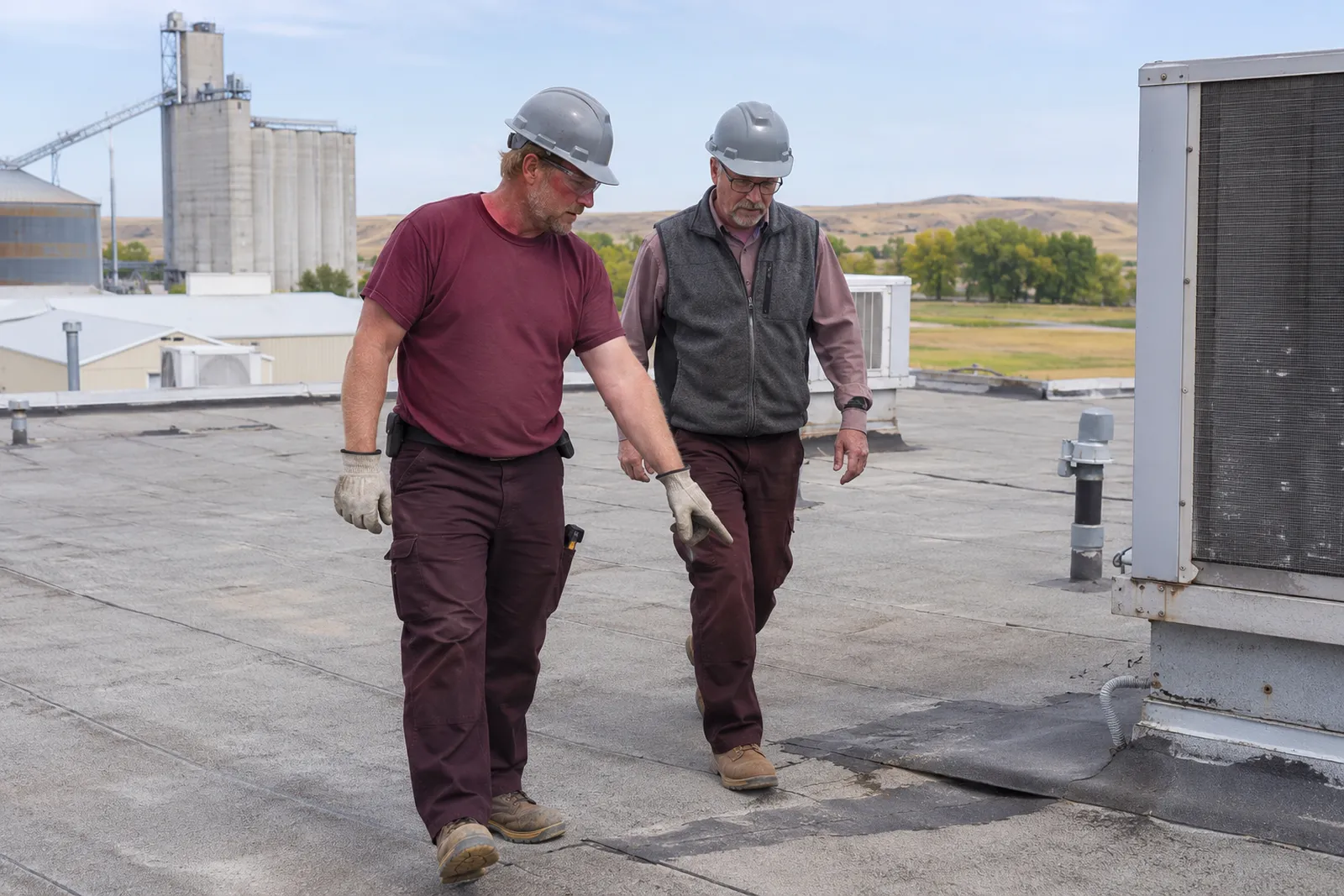
Dry Walls and Ceilings
Most storefront leaks come in at the parapet or a scupper and run down inside the wall. Fixing the flashing there keeps plaster, displays, and the shop next door out of the water path.
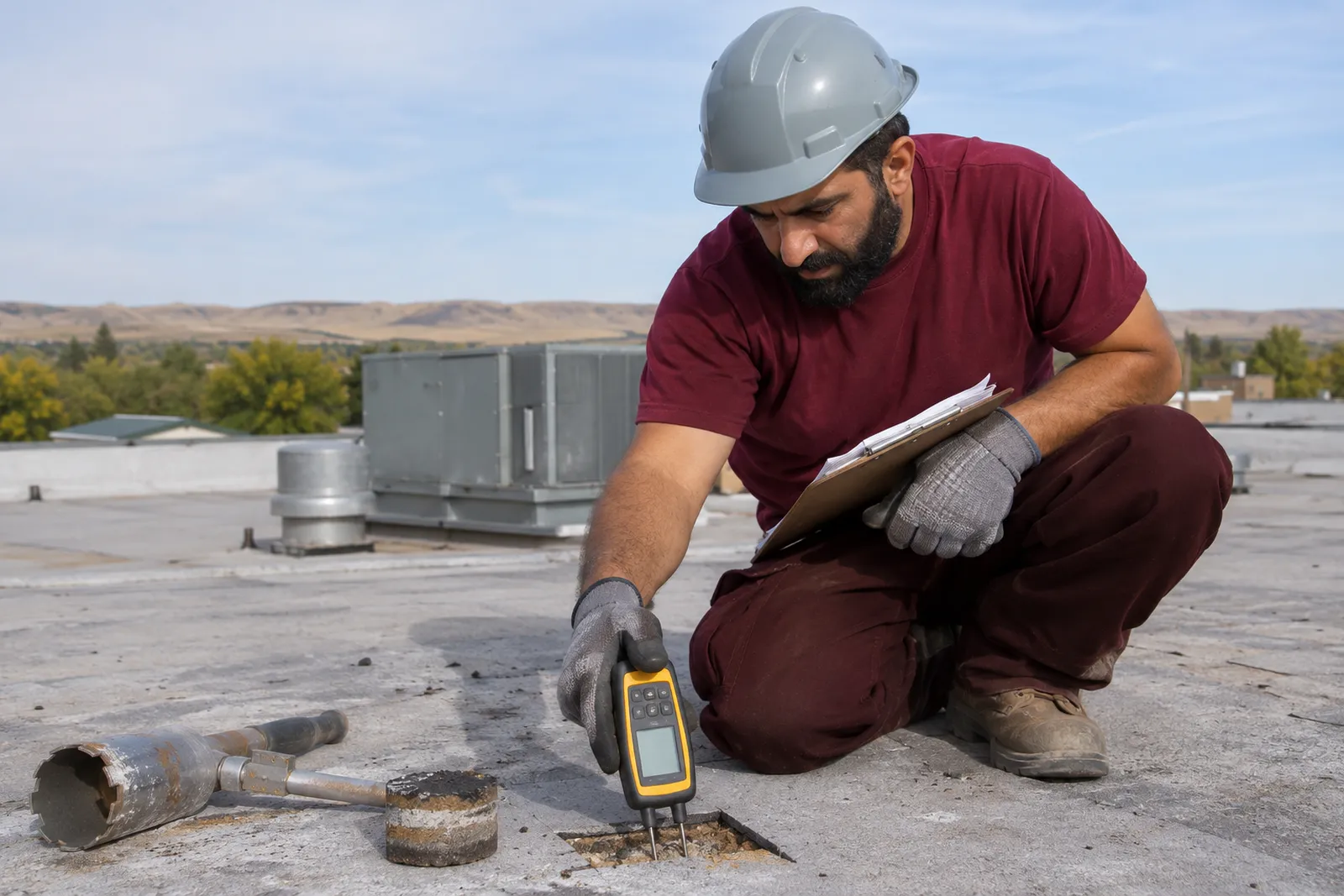
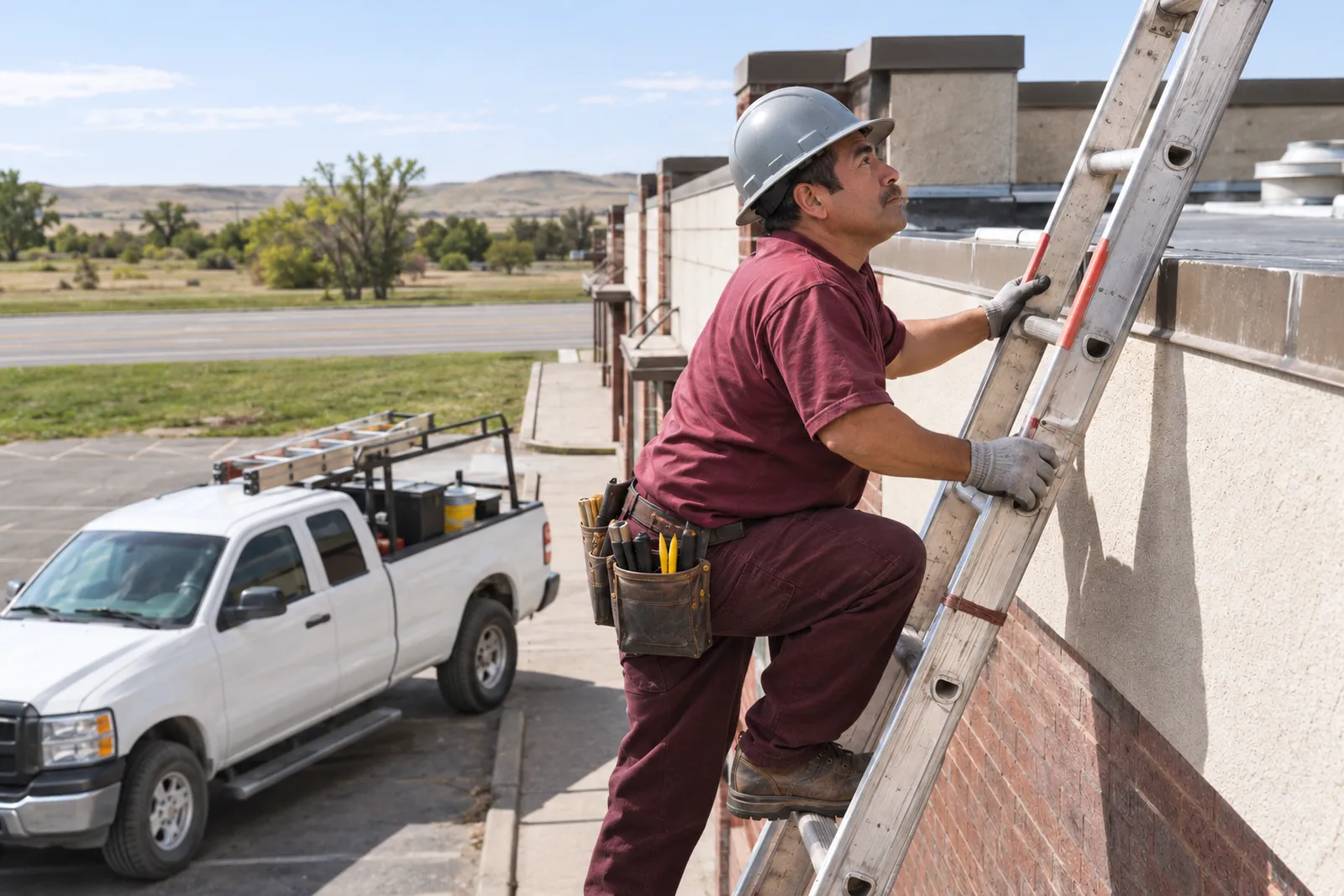
As a Curtis commercial roof repair contractor, we repair storefront flat roofs, from parapet flashing and seams to scuppers, matched to the roof layers underneath.
Curtis commercial roof repair often means a flat roof tucked behind a parapet on an older storefront. Many of these roofs have been covered more than once, so there can be two or three layers under the surface.
We cut a small test area to see what is there, then repair with material that bonds to the existing roof.
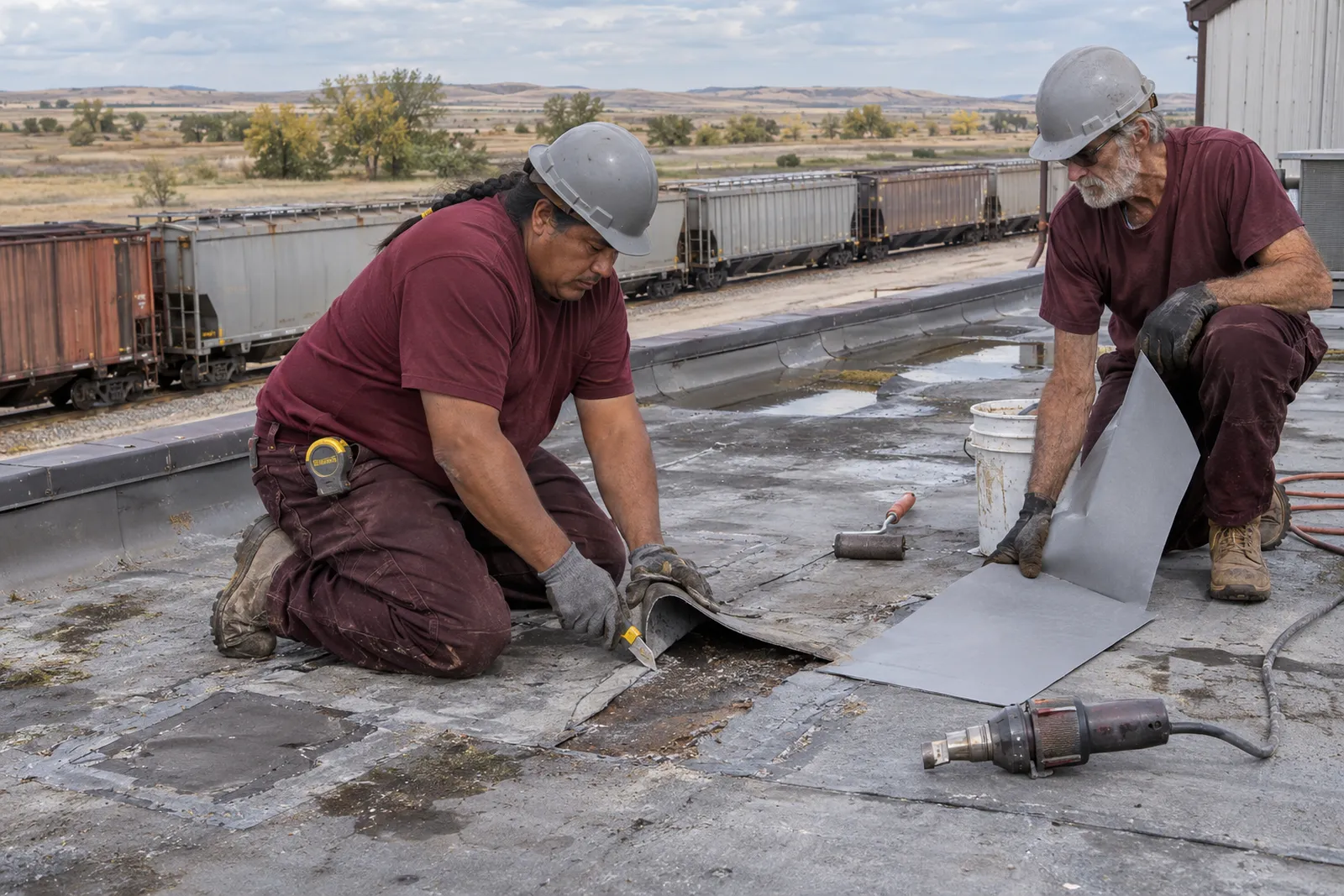
Storefront roofs are small, but the walls around them make the details count.
Brick parapets on storefronts crack at the mortar and let water behind the base flashing. Repairs reset the flashing and counterflashing so water runs over them and away from the brick.
Roofs laid over older roofs hide blisters and soft spots between the layers. Test cuts show which layer the water reached, and patches go into the right one.
Through-wall scuppers on storefronts rust or lose their sealant at the wall. Rebuilding the scupper box and sealing it to the membrane keeps water from running inside the wall.
Older storefronts collect vent pipes, abandoned stacks, and small HVAC units over the years. Each opening gets a fresh boot or curb flashing, and unused holes get closed.
Shared walls between storefronts carry flashing that two roofs depend on. Leaks here travel into the neighbor's space, so we check both sides and the insulation along the wall.
Storefront leaks reach displays, offices, and neighbors quickly. Repairs at the walls keep water out of all three.
Most storefront leaks come in at the parapet or a scupper and run down inside the wall. Fixing the flashing there keeps plaster, displays, and the shop next door out of the water path.
Matching the patch to the layer underneath means new and old roofing seal together instead of peeling apart at the edges.
Rebuilt scupper boxes and sealed leaders move water off a small roof fast, before it rises against the parapet.
Sealed party-wall flashing keeps water from crossing into the next storefront, which protects both businesses.
Flat roof work leads on storefronts. The other services cover the metal and larger buildings in town.
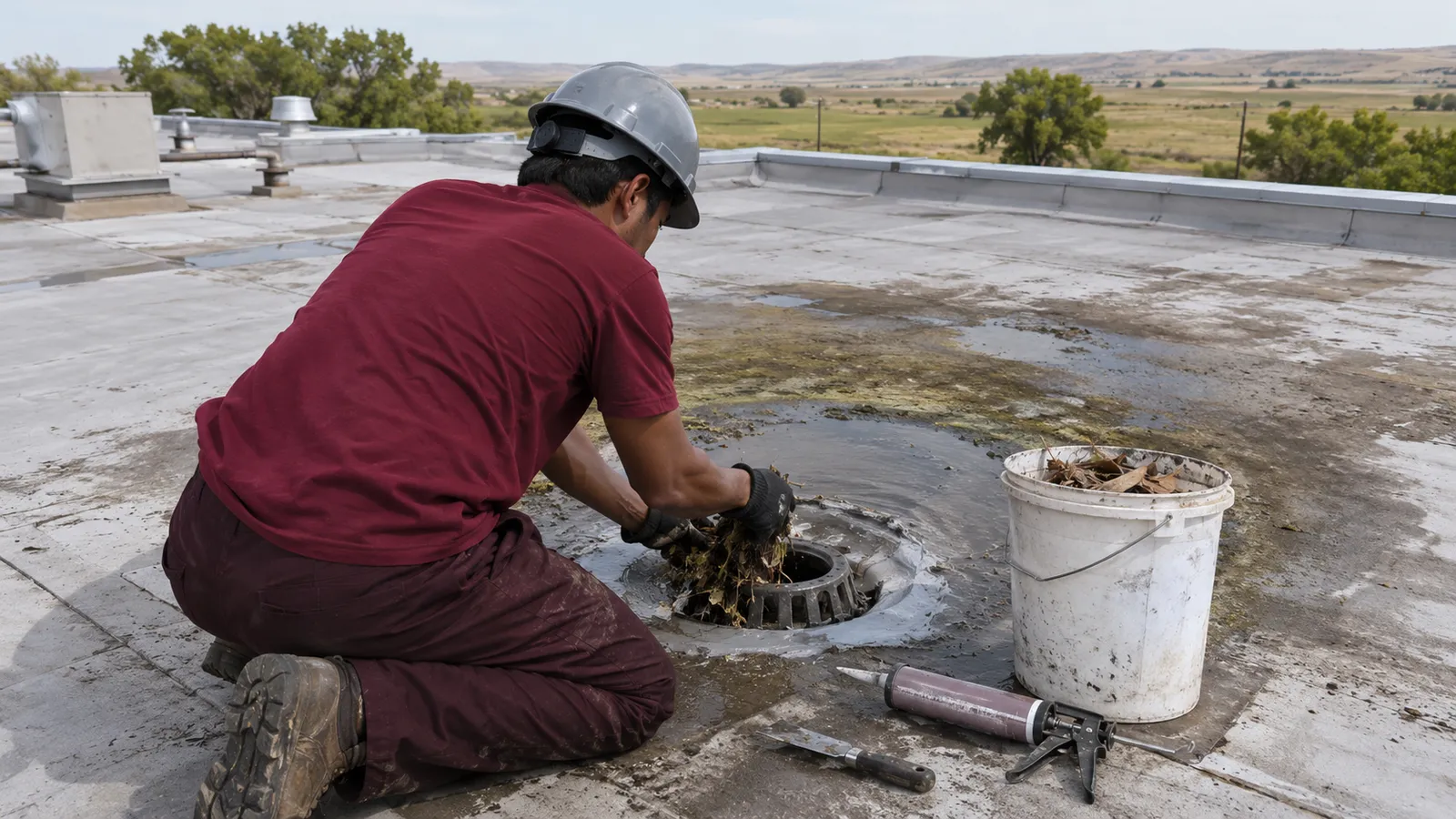
Membrane seams, base flashing, and layered roofs behind parapets get repaired after a test cut shows which material to match.
Flat roof repair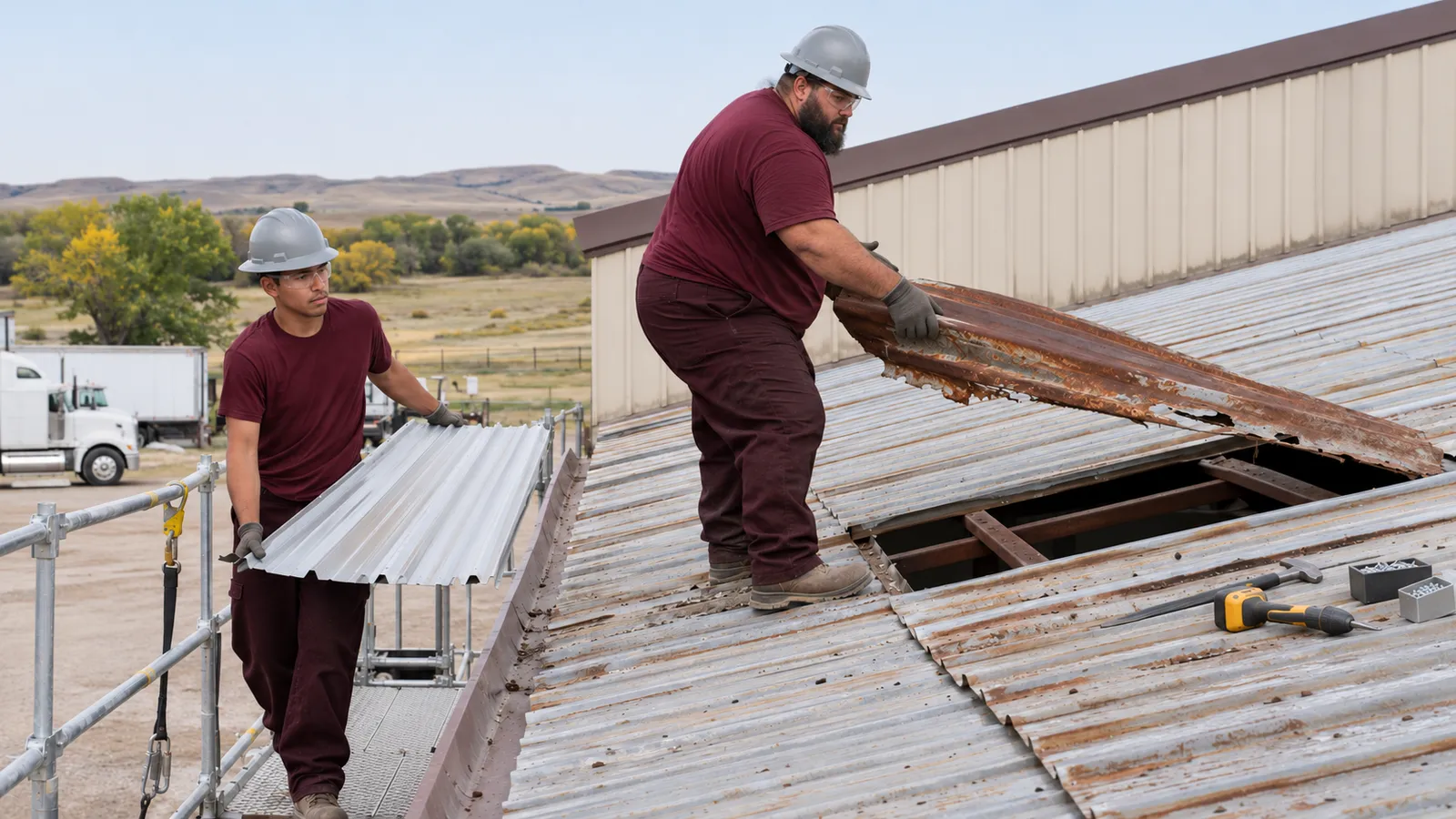
Metal buildings and additions behind the main street get new fasteners, resealed laps, and replaced rusted panels where needed.
Metal roof repair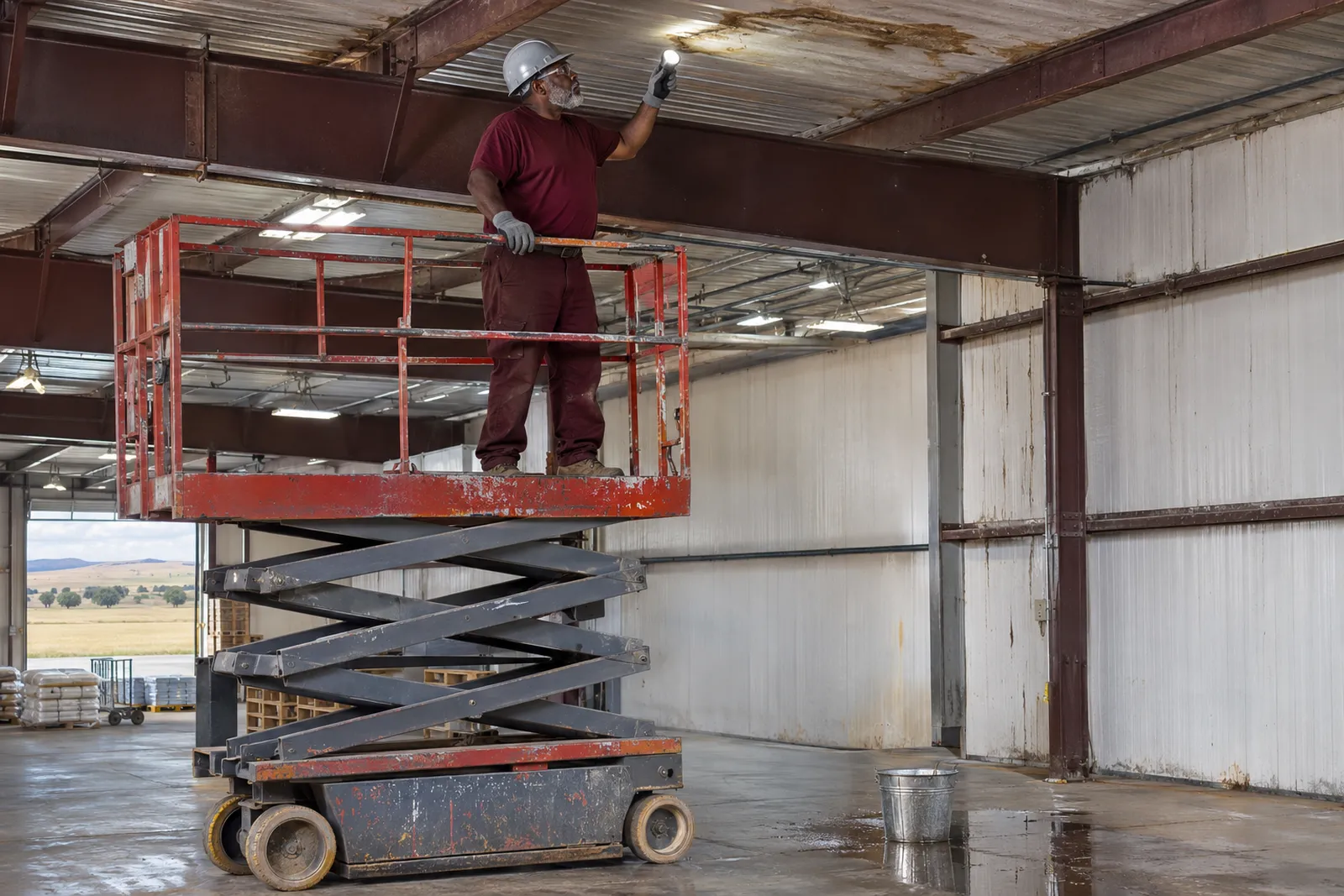
A stain on a storefront ceiling gets traced back through the wall or the roof to the opening that let water in.
Roof leak repair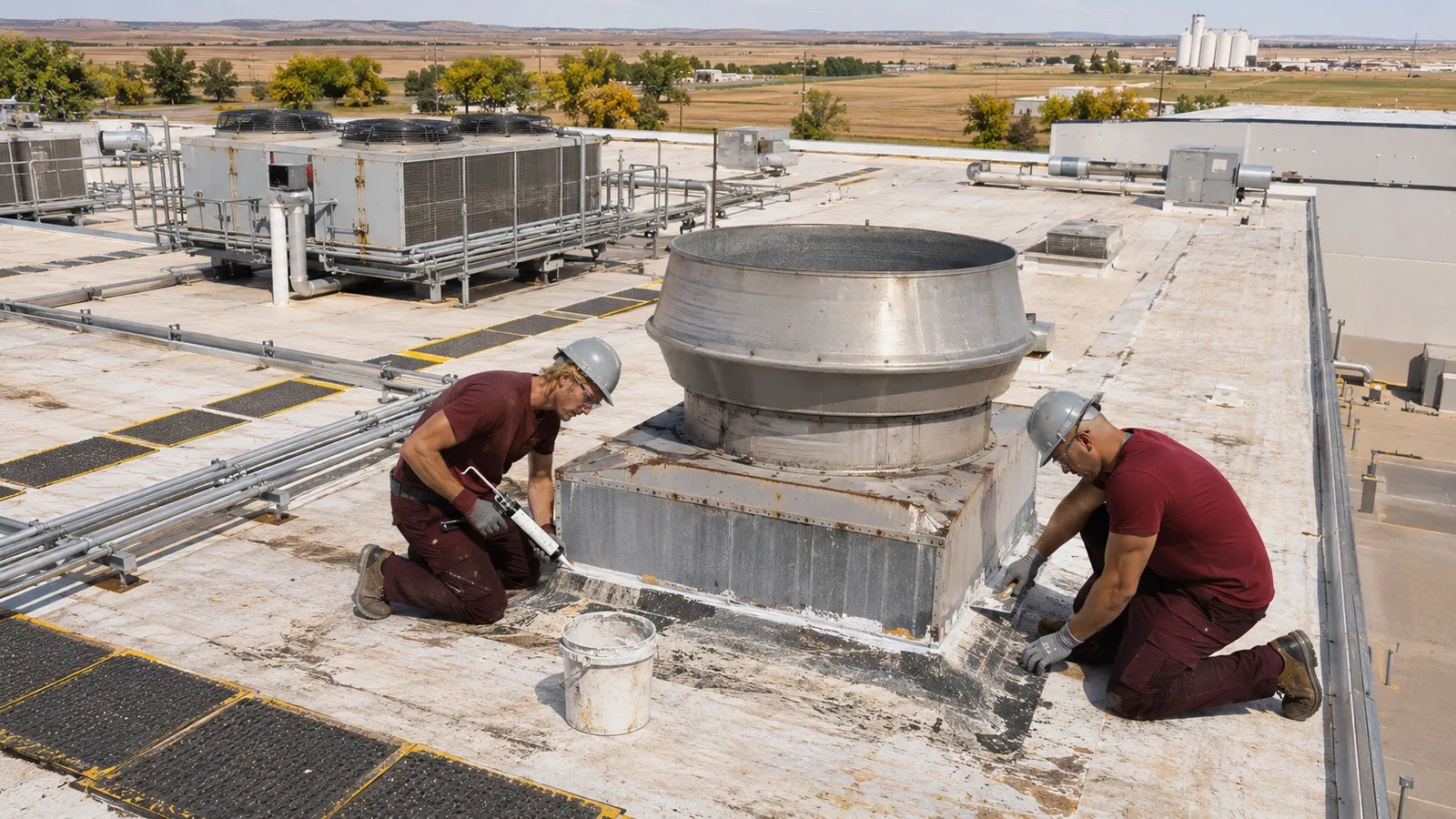
Larger buildings with fans, vents, and skylights get those details resealed and reflashed while business inside continues.
Industrial roof repairParty-wall and parapet leaks travel inside the brick. Call and we will check the flashing on both roofs and the scupper nearby.
Small storefront roofs still get the full four steps.
Parapets, coping, counterflashing, and party walls get inspected along with the field, since most storefront leaks start at a wall.
A small cut shows how many layers the roof has, what each is made of, and whether the insulation is dry.
Patches, flashing, and scupper work use material that bonds to the layer underneath, so new and old seal together.
The test area gets sealed like any other repair, and you get photos of the layers we found and the work done.
Own a building outside Curtis? We repair roofs in these towns as well; call us or send us a message about anywhere else.
| Town | County | What We See On Roofs There |
|---|---|---|
| North PlatteHome Base | Lincoln County | Fleet shops, ranch supply buildings, and rail-service warehouses. |
| Ogallala | Keith County | Hail and wind damage on storefront and shop roofs. |
| Sutherland | Lincoln County | Small repairs grouped into one trip to the roof. |
| Grant | Perkins County | Older metal shop roofs with tired fasteners and laps. |
| Hershey | Lincoln County | Twice-yearly checks backed by a photo record of each roof. |
Answers about layered roofs, parapets, and repair cost on main street buildings.
Storefronts
Most storefront repairs involve parapet flashing, membrane seams, and the drains or scuppers. Older storefronts can have several roof layers, which changes how the repair is made.
A small test cut shows what is under the surface, and the repair then matches that system so the new and old materials bond.
Cost
Storefront roofs are small, so detail work at parapets, scuppers, and shared walls makes up most of the price.
The number of layers, wet insulation found in the test cut, and access to the roof from the street or alley change the rest.
Coverage
Yes. We repair storefront and other commercial roofs in Curtis, including small ones behind a single parapet.
Call with the address and where the water shows up, and we will set up an inspection of the roof and walls.
Shared Walls
Shared walls carry flashing that two roofs rely on. We inspect both sides, repair the counterflashing and base flashing, and seal the coping where it spans the wall.
If the neighbor's roof needs work too, we note it so both owners can decide together.
Layers
For most repairs, the patch can go into the existing top layer when the layers below are dry and well attached.
Wet or loose layers in the repair area get cut out first, and a roof with many soaked layers is a candidate for replacement instead.
Scuppers
Through-wall scuppers sit in the brick, and the sealant between the metal box and the wall dries out. Some boxes also rust through at their seams.
Water then runs inside the wall instead of out the scupper. Rebuilding the box and sealing it to the membrane and the wall stops it.
Tell us where water shows up in the store. We will check the walls and roof above it and repair the source.