

Insulation That Stays Dry
Wet insulation is the costly part of a flat roof leak. Catching an open lap or a failed drain before water spreads through the boards keeps the repair to a patch instead of a tear-out section.
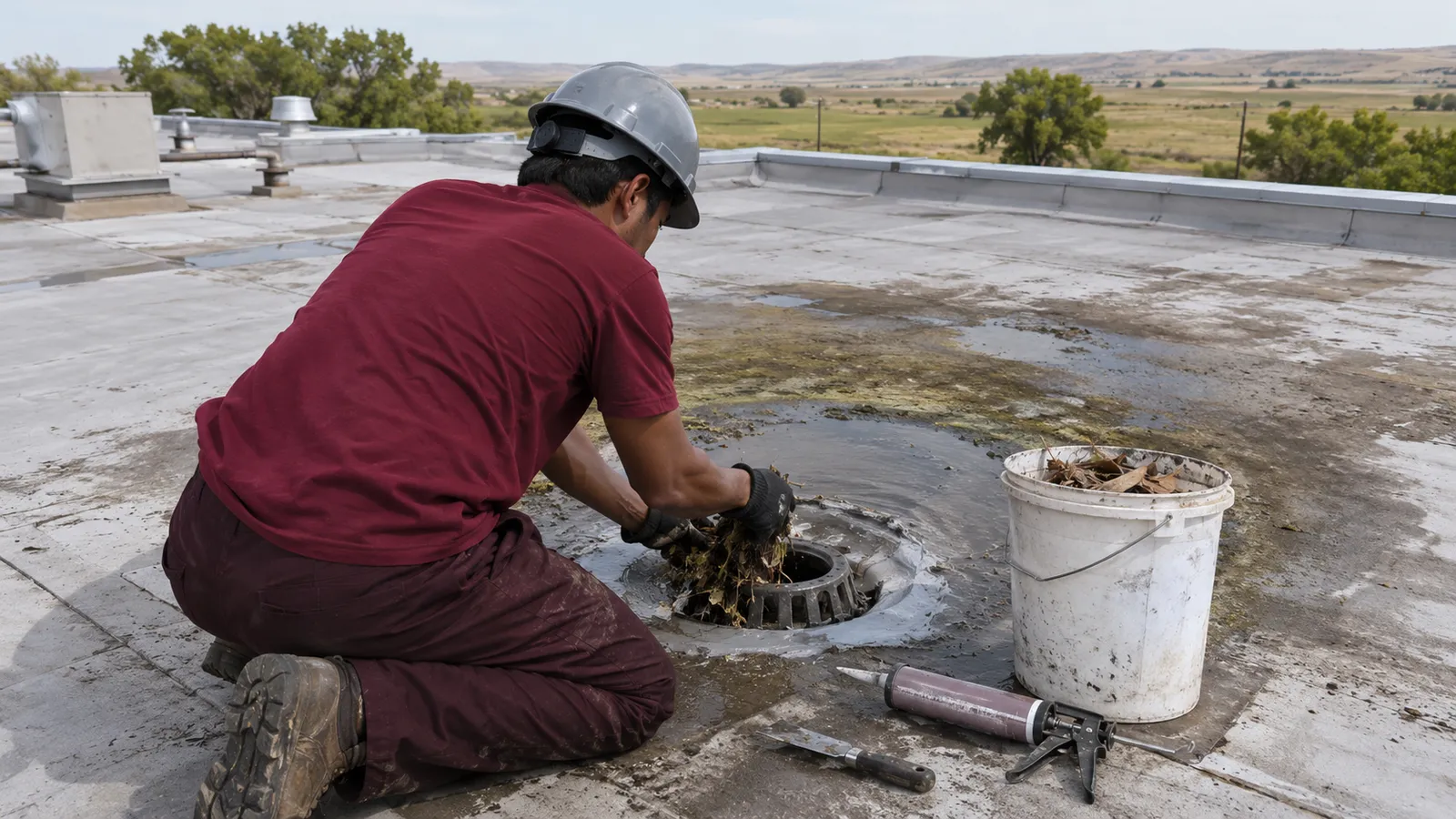
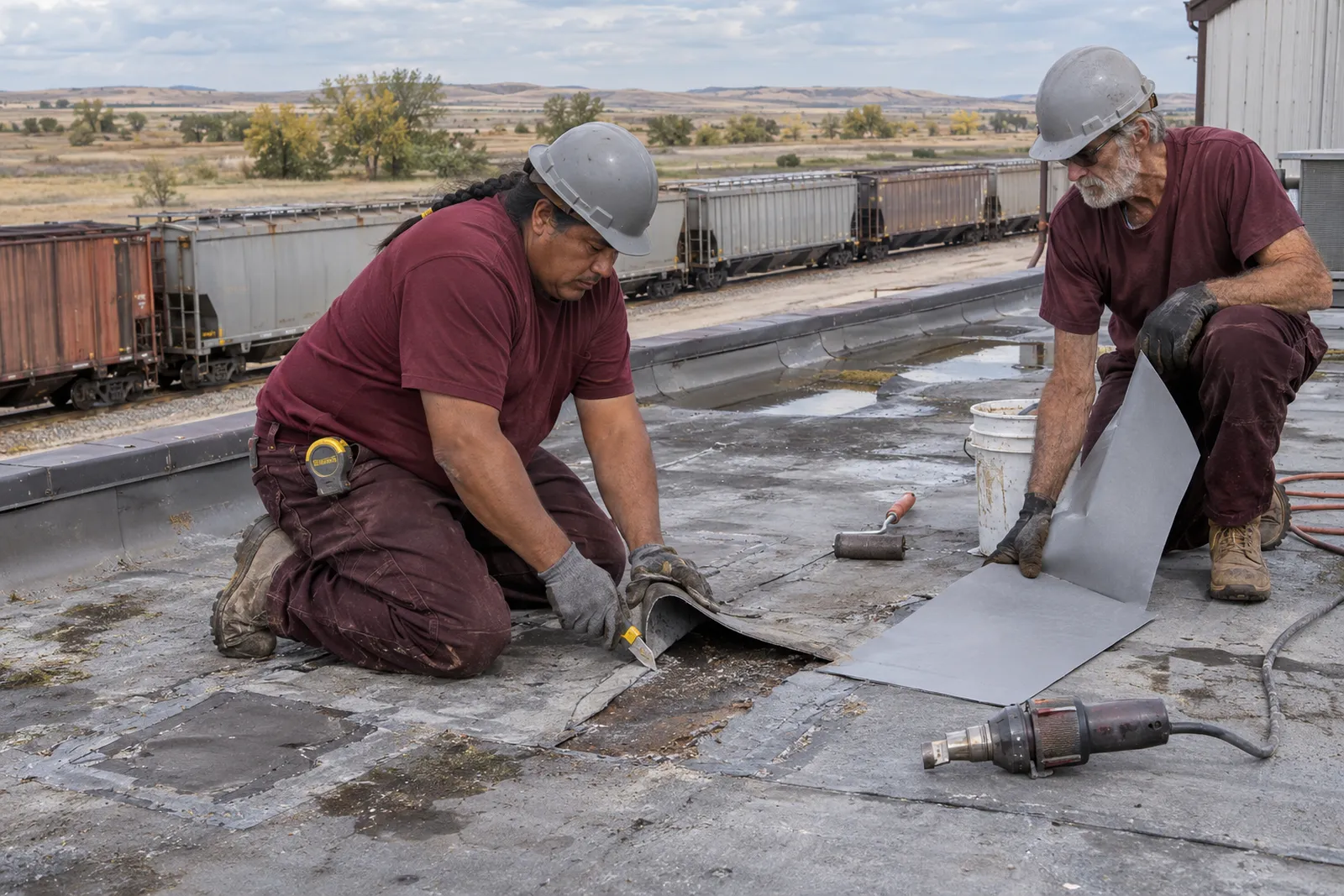
As a North Platte flat roof repair contractor, we patch, reweld, and reflash low-slope roofs and fix the drains and low spots that hold water.
North Platte flat roof repair starts with sorting what you see into the right size of job. Moisture readings settle the close calls.
| Roof Condition | Patch | Section Repair | Replacement Talk |
|---|---|---|---|
| Split at a single lapMembrane solid on both sides of the split. | Usually Fits | Rarely | Rarely |
| Ring of debris around a drainWater stands near the bowl after storms. | Sometimes | Usually Fits | Rarely |
| Blisters across one bayBuilt-up or mod bit raised in a cluster. | Rarely | Usually Fits | Rarely |
| Soft spots underfootInsulation crushed or wet under the membrane. | Rarely | Usually Fits | Sometimes |
| Brittle, cracking surface everywhereMembrane shrinks and splits in new places. | Rarely | Sometimes | Usually Fits |
Low-slope roofs fail in predictable places. Here is what we look for in each zone and what the repair involves.
Base flashing at the wall shrinks and pulls loose, leaving a gap where the membrane turns up. We strip the loose section, prime the wall, and run new flashing up under the coping.
Heat-welded TPO laps and taped EPDM seams open where foot traffic and freeze cycles work them. Opened laps get cleaned, probed, and welded or taped with new cover strip.
Clamping rings loosen and strainers crack after ice and debris sit in the bowl. Repairs reset the ring, replace the insert, and reflash the membrane into the drain.
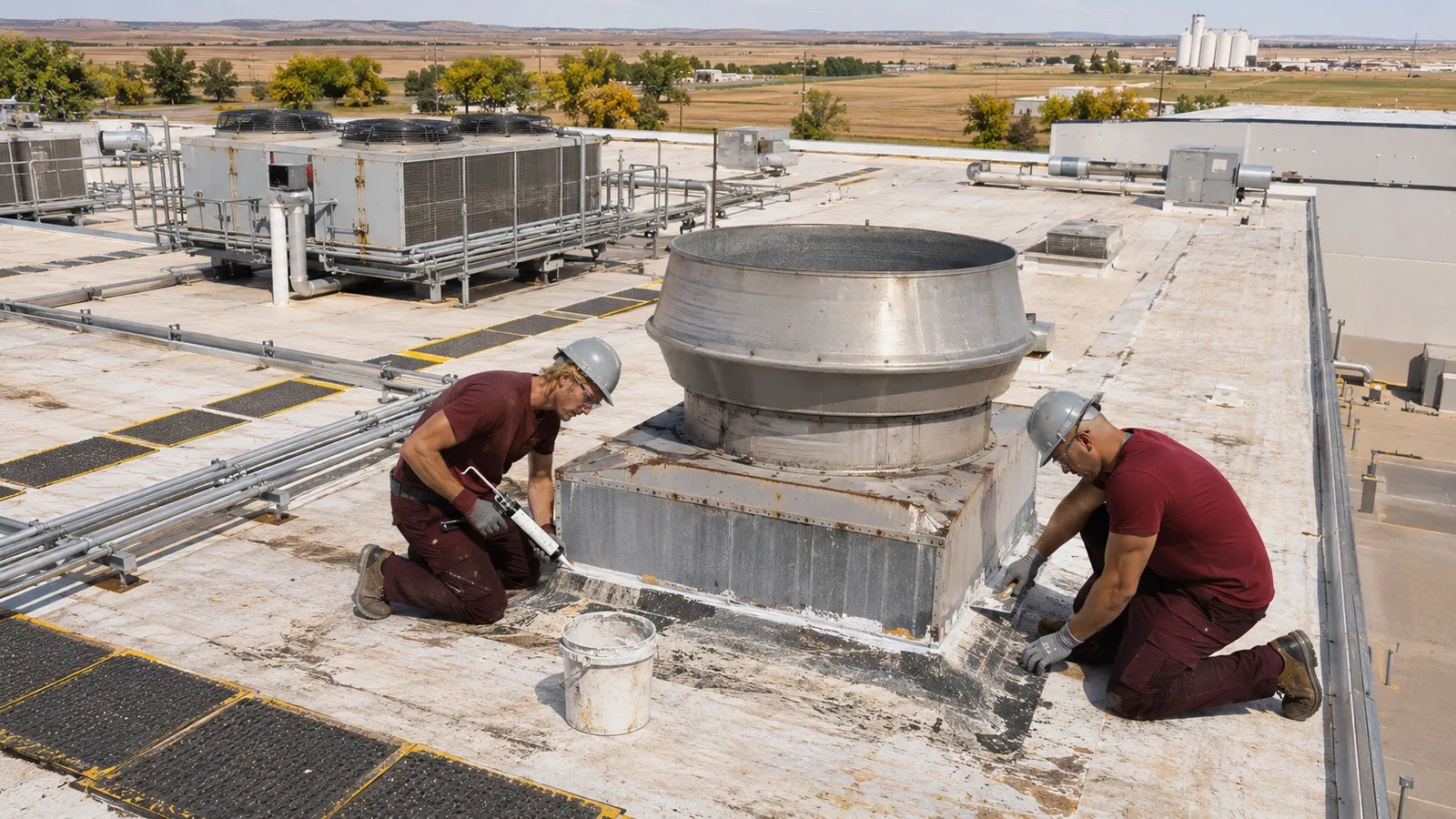
Pitch pans dry out and pipe boots split along their collars. Curbs under HVAC units get new corners and target patches, and boots get replaced with ones sized to the pipe.
Ponding that stays two days or longer can crush insulation and sag the deck. Low spots get built up with tapered boards or crickets that push water toward a drain.
Each option fits a different problem. Most jobs combine two or three of them on one visit.
Reset or replace the clamping ring and insert, clear the line, and seal the membrane back into the bowl.
Tapered insulation, crickets, added drains, or new scuppers move water that sits on the membrane after storms.
Clean and probe the lap, then heat-weld TPO or apply primer and cover tape to EPDM along the open section.
Cut out blistered or split plies, dry the surface, and lay new plies or torch-applied patches past the damage on every side.
A low-slope roof holds water longer than any other roof. Repairs that keep it draining protect what sits under it.
Wet insulation is the costly part of a flat roof leak. Catching an open lap or a failed drain before water spreads through the boards keeps the repair to a patch instead of a tear-out section.
Clearing drains and building up low spots shortens the time water sits on the membrane, which slows wear on seams and lowers the weight on the deck.
Ponded water freezes on North Platte roofs and pries at seams. Draining it before winter keeps ice from opening laps that were tight in the fall.
A roof checked and repaired on a calm day costs less than an emergency dry-in during a storm, and it lets you plan around tenants.
Ponding that lingers past 48 hours wears the membrane and loads the deck. Call and we will check the drains and the low spots.
Four steps take a flat roof from leaking to tested.
We walk every seam and flashing, open each drain, and note where water stands. Inside, we match ceiling stains to the roof areas above them.
Core cuts near the problem show what the roof is built of and whether the boards are wet. That decides patch size and material.
Damaged membrane comes out, wet insulation gets replaced, and new material is welded, taped, or torched to match the existing system.
Repaired drains get water run through them, seams get probed, and photos of each repair go into your roof file.
Flat roofs often share a building with metal sections, rooftop equipment, and leaks that need tracing.
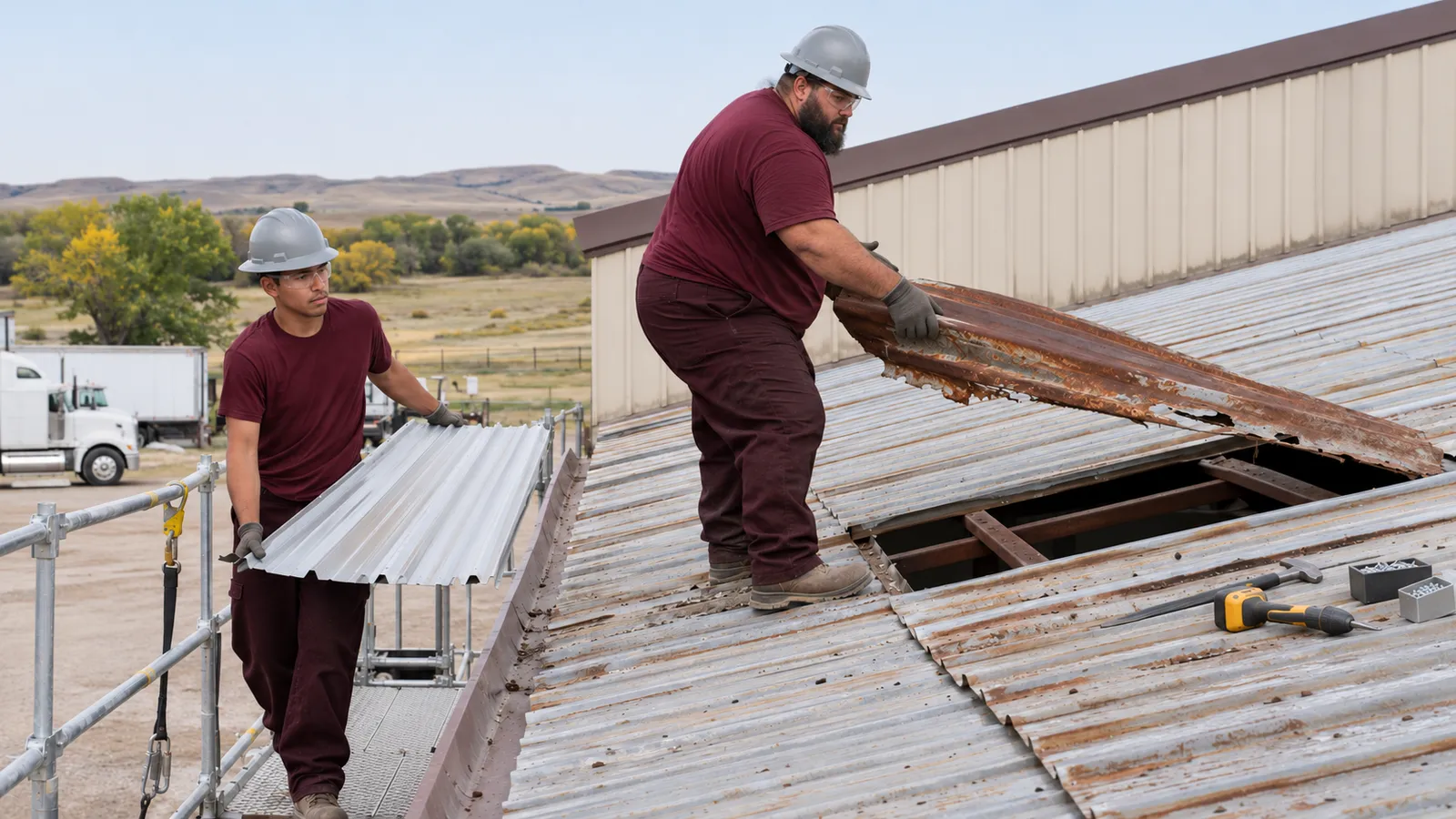
Fasteners, laps, and rusted panels on shop and warehouse roofs.
See metal roof repair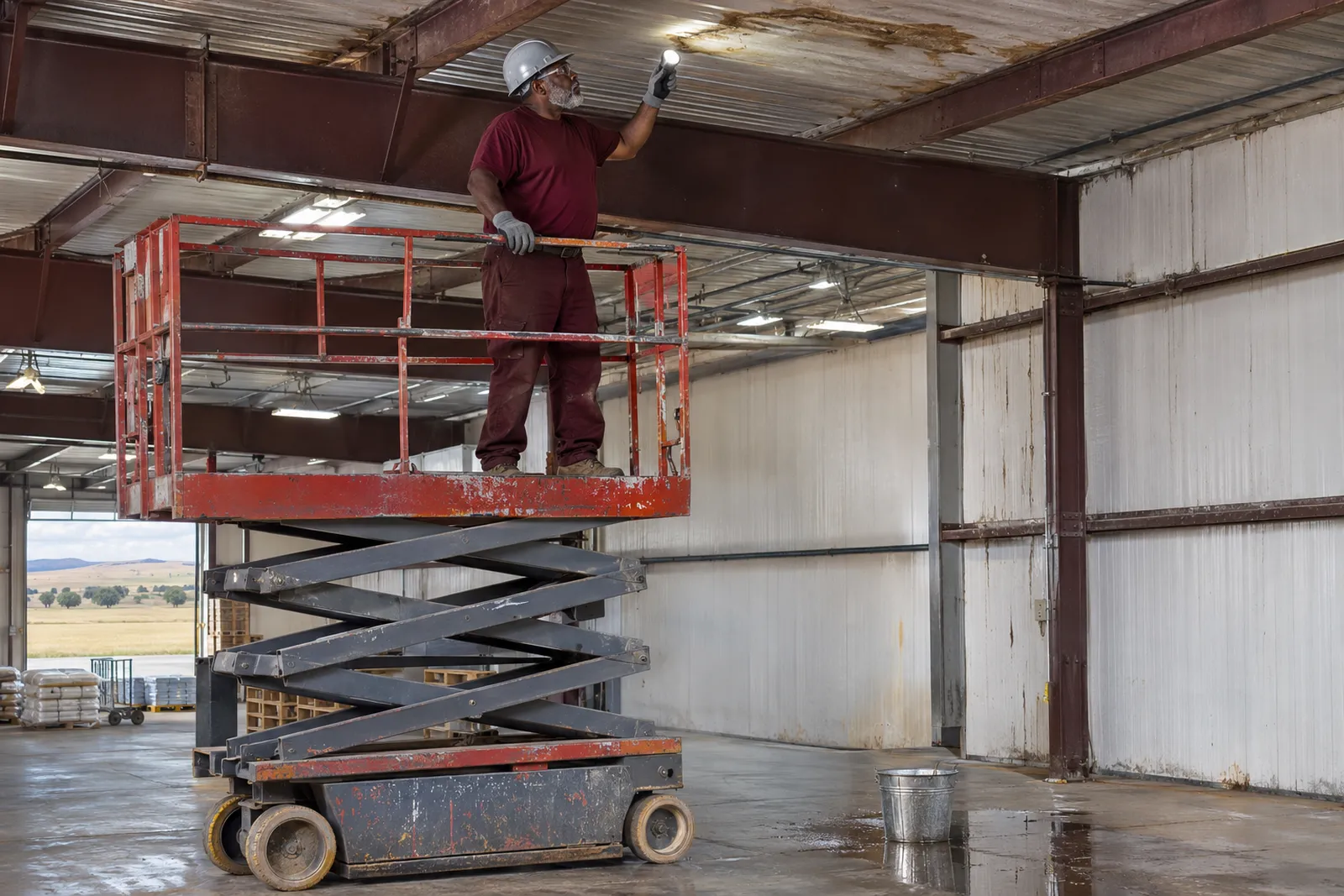
Answers about drains, ponding, patching, cost, and code for low-slope roofs in town.
Drains
Most drain repairs reset the clamping ring or replace the insert, and some also need new membrane flashing around the bowl, since ice and debris crack drain parts.
We clear the line, confirm water flows, and seal the membrane to the drain. Tapered boards around the bowl help water reach it.
Heavy Rain
In a downpour, water collects faster than drains and scuppers can move it. As the water rises, it reaches open seams, cracked flashing, and gaps at walls that stay dry in a light rain.
Clogged drains make it worse, so we check the drains, the scuppers, and every lap near the high-water line.
Ponding
Ponding gets fixed by changing the drainage: tapered insulation crickets, built-up low spots, extra drains or scuppers, or deck repair where it sags.
Water standing longer than 48 hours wears the membrane and adds load, and in winter it freezes and works at the seams.
Cost
Cost follows the membrane type, the size of the damaged area, and whether the insulation under it is wet.
Older membranes can take extra work to match, details at walls, curbs, and drains take longer than open-field patches, and roof height and access change the labor.
Patching
Built-up and modified bitumen roofs can usually be patched. We cut out the blistered or split area, dry it, and lay new plies or a torch-applied patch.
Every patch laps onto solid roofing on all sides. Where large areas are brittle or wet, replacing those sections works better.
Code
The city has adopted the 2018 International Existing Building Code, which covers repairs and alterations to existing buildings, roof repairs included.
Nebraska's state building code adopts the same 2018 edition, and North Platte building officials decide how it applies to a given repair.
Send us the address and what you see on the roof. We will inspect it and repair the drains, seams, and flashing that need it.