
Panels That Stay in Service
Replacing washers, screws, and lap sealant costs a fraction of new panels. Done before rust spreads from the leak, it keeps the original sheets on the roof and out of the scrap pile.
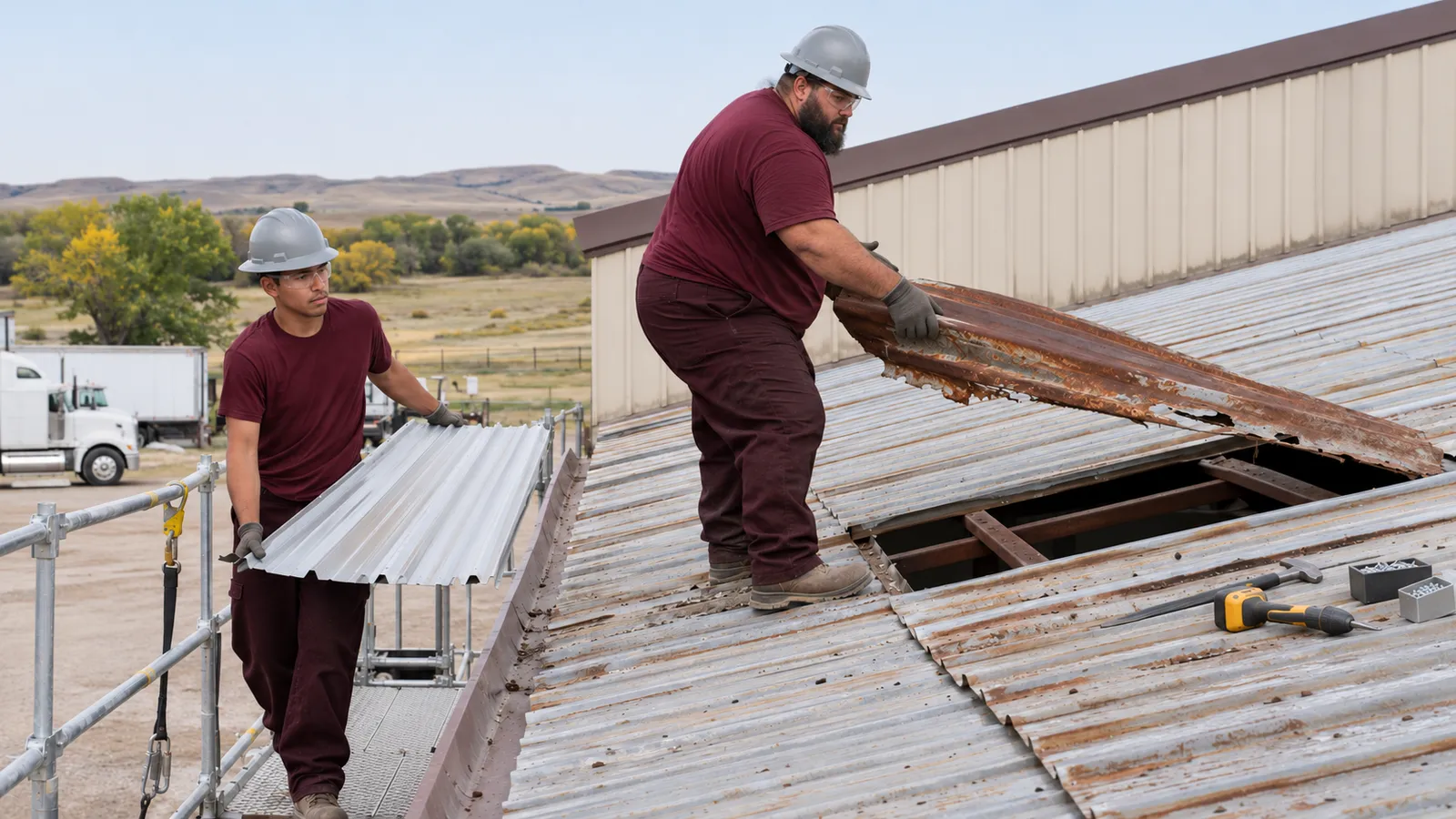
As a North Platte commercial metal roof repair contractor, we replace failed fasteners, reseal laps, and swap rusted panels on shops and warehouses.
North Platte commercial metal roof repair covers most of what shows up on shop roofs. This chart sorts common conditions by the size of job they need.
| Roof Condition | Spot Repair | Panel Replacement | Replacement Talk |
|---|---|---|---|
| Drip at a screw headWasher cracked or screw backed out. | Usually Fits | Rarely | Rarely |
| Water at an end lapSealant dried and the lap opened. | Usually Fits | Rarely | Rarely |
| Rust holes in a few panelsPurlins solid under the bad sheets. | Rarely | Usually Fits | Rarely |
| Dented panels after hailSeams and laps still closed. | Sometimes | Usually Fits | Rarely |
| Rust-through across most baysPanels and purlins both corroded. | Rarely | Sometimes | Usually Fits |
Metal roofs leak at joints and fasteners far more often than through the panel itself.
Trim at the eave and rake loosens as screws back out, and wind gets under it. We refasten trim, reseal the closure strips, and replace bent pieces with matching profiles.
Side and end laps hold sealant that dries and shrinks over the years. Laps are cleaned of old sealant, fitted with new butyl tape, and stitched back down with fresh screws.
Ice builds in gutters and valley pans each winter and backs water under the panel ends. Seams in the gutter get resealed, and split valley pans get replaced.
Penetrations through ribbed panels are hard to seal, and old pipe jacks crack in the sun. New boots shaped to the rib and resealed curb flashing close those holes.
Condensation and leaks rust the purlins and soak the faced insulation under the panels. We check purlin condition before replacing any sheet so new panels fasten into solid steel.
Pick the repair by where the water gets in. Many roofs need two or three on one visit.
Remove failed sealant, tighten or replace lap screws, and apply butyl tape and a reinforced seam patch over the lap.
Back out leaking screws and drive larger-diameter fasteners with new washers, or plate stripped holes before refastening.
Unfasten the damaged sheet, slide in a new panel of matching profile and gauge, seal the laps, and refasten.
Reset loose ridge cap, replace torn closure strips, and refasten eave and rake trim that wind has lifted off the panels.
Most metal roof leaks come from parts that cost little to replace. Fixing them early keeps the panels in service.
Replacing washers, screws, and lap sealant costs a fraction of new panels. Done before rust spreads from the leak, it keeps the original sheets on the roof and out of the scrap pile.
New screws with fresh washers seal the holes that thermal movement opened, and a roof-wide check catches the ones about to fail next.
Closing leaks at laps and boots keeps the faced insulation under the panels dry, so it stops sagging and dripping onto stock.
Panels and trim matched to the existing profile and gauge give a weathertight fit, even where the new color looks brighter than weathered sheets.
That pattern points to tired washers along a purlin. Call and we will check every fastener on that run and the laps beside it.
Metal repairs follow four steps from the first walk to the last screw.
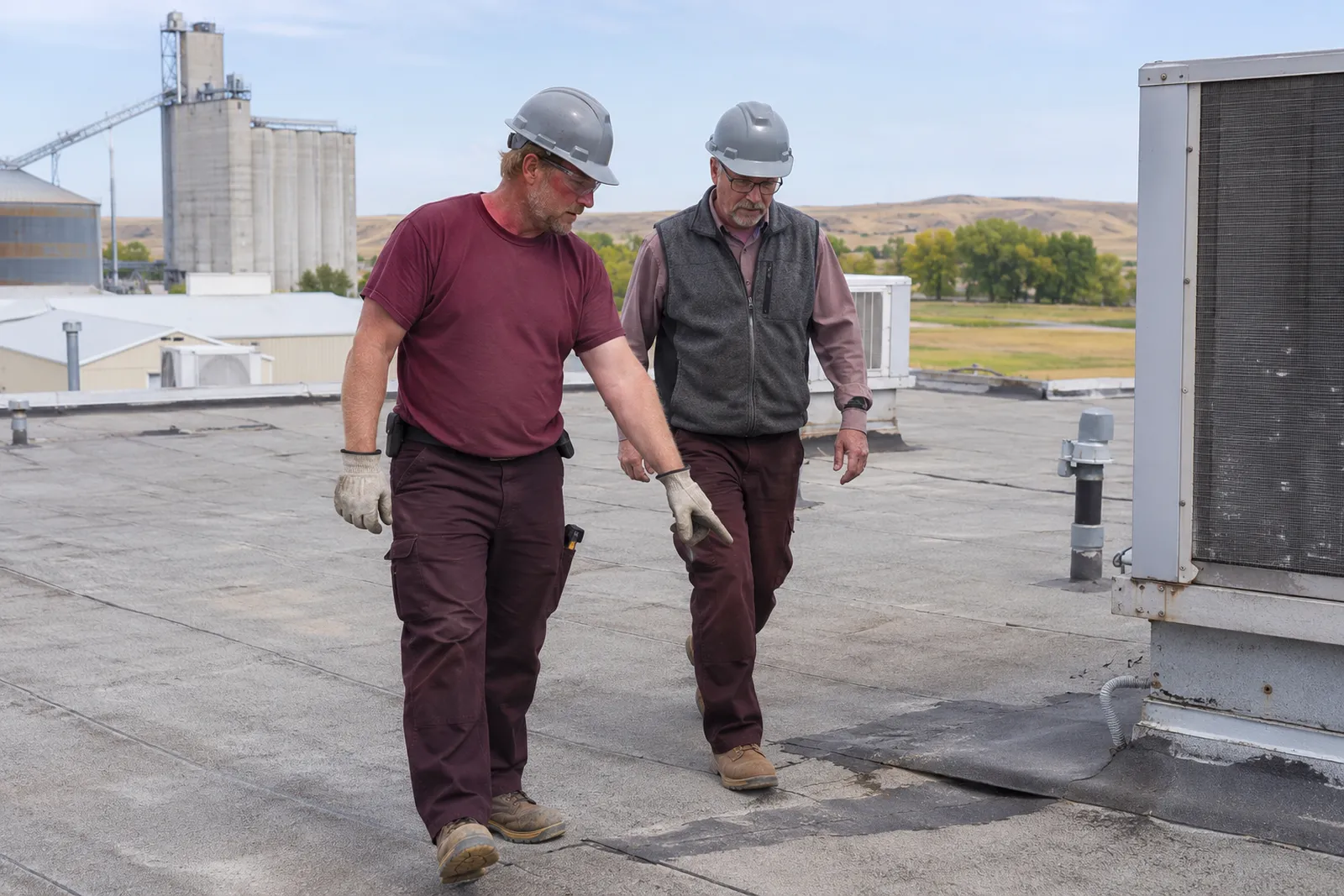
We walk the roof along the purlin lines, checking screws, laps, ridge cap, trim, and every penetration, and match interior drips to the panels above.
Rust at a leak often reaches the steel underneath. Purlins under any panel slated for replacement get checked so new screws bite solid metal.
Laps get new butyl tape, leaking screws get larger fasteners and washers, and rusted sheets come out for matching panels.
Seams are checked for gaps, fasteners for seating, and each repair is photographed for your records before we leave the roof.
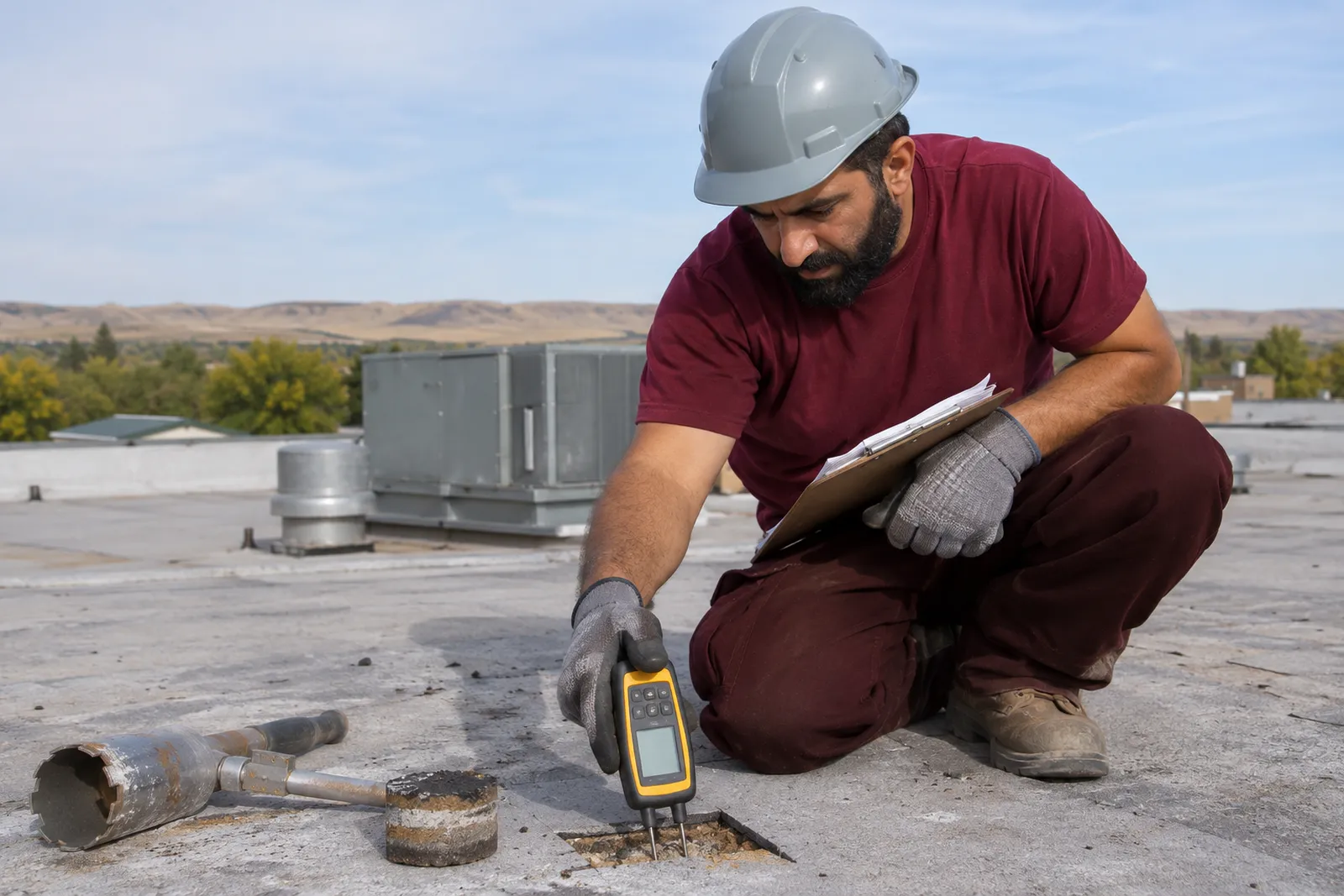
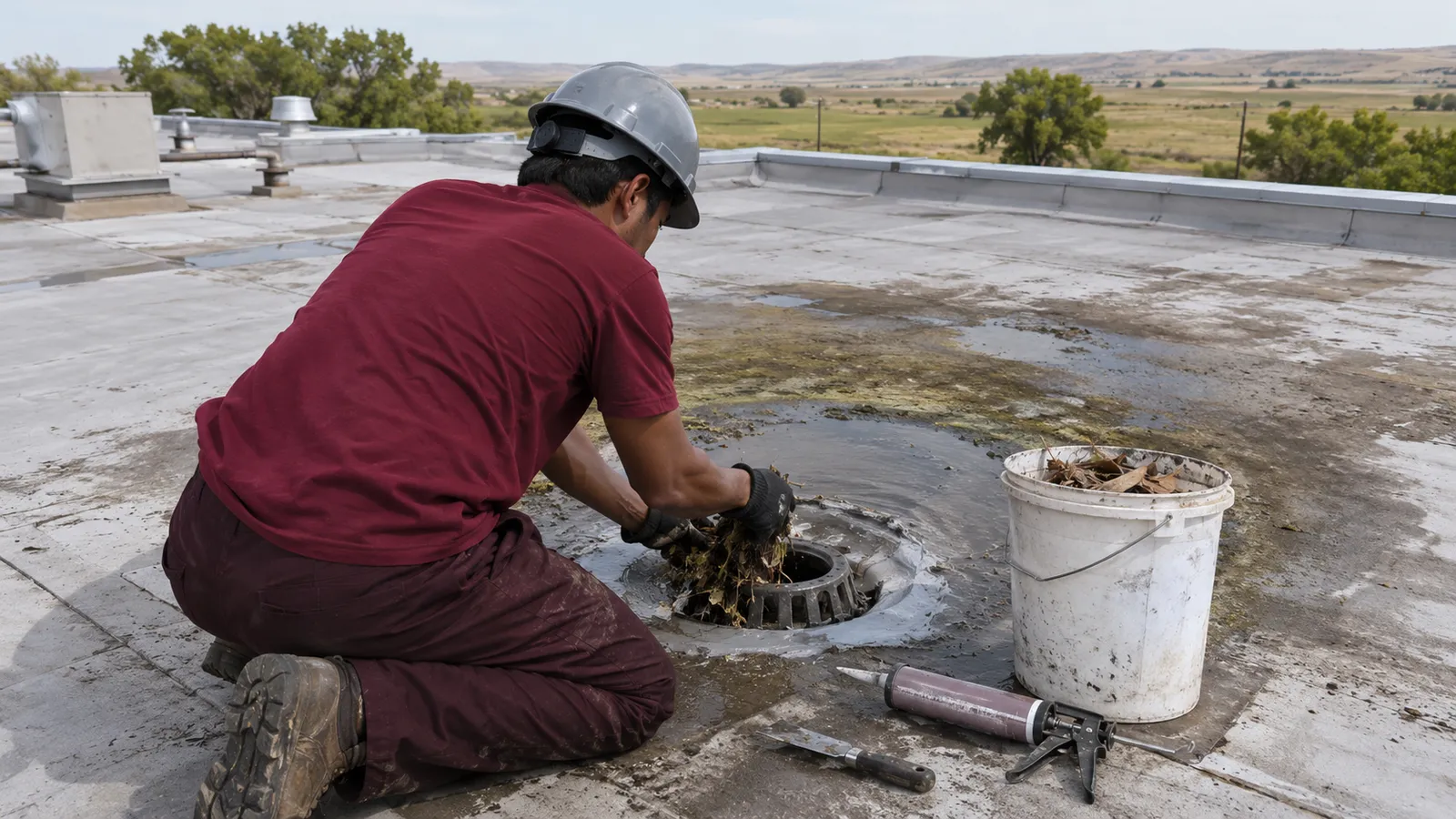
Metal shops often have a flat section, a leak to trace, or plant equipment on the roof.
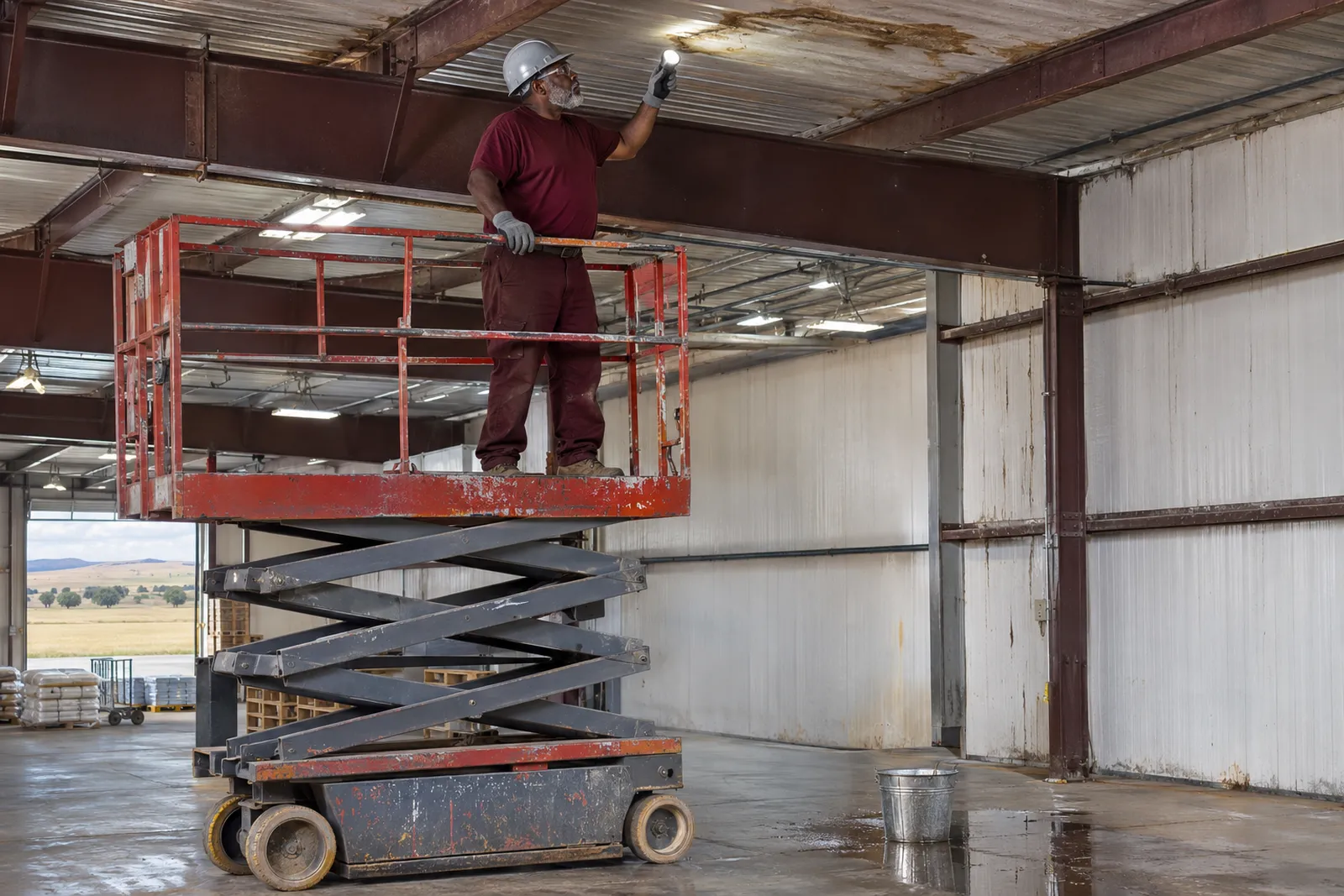
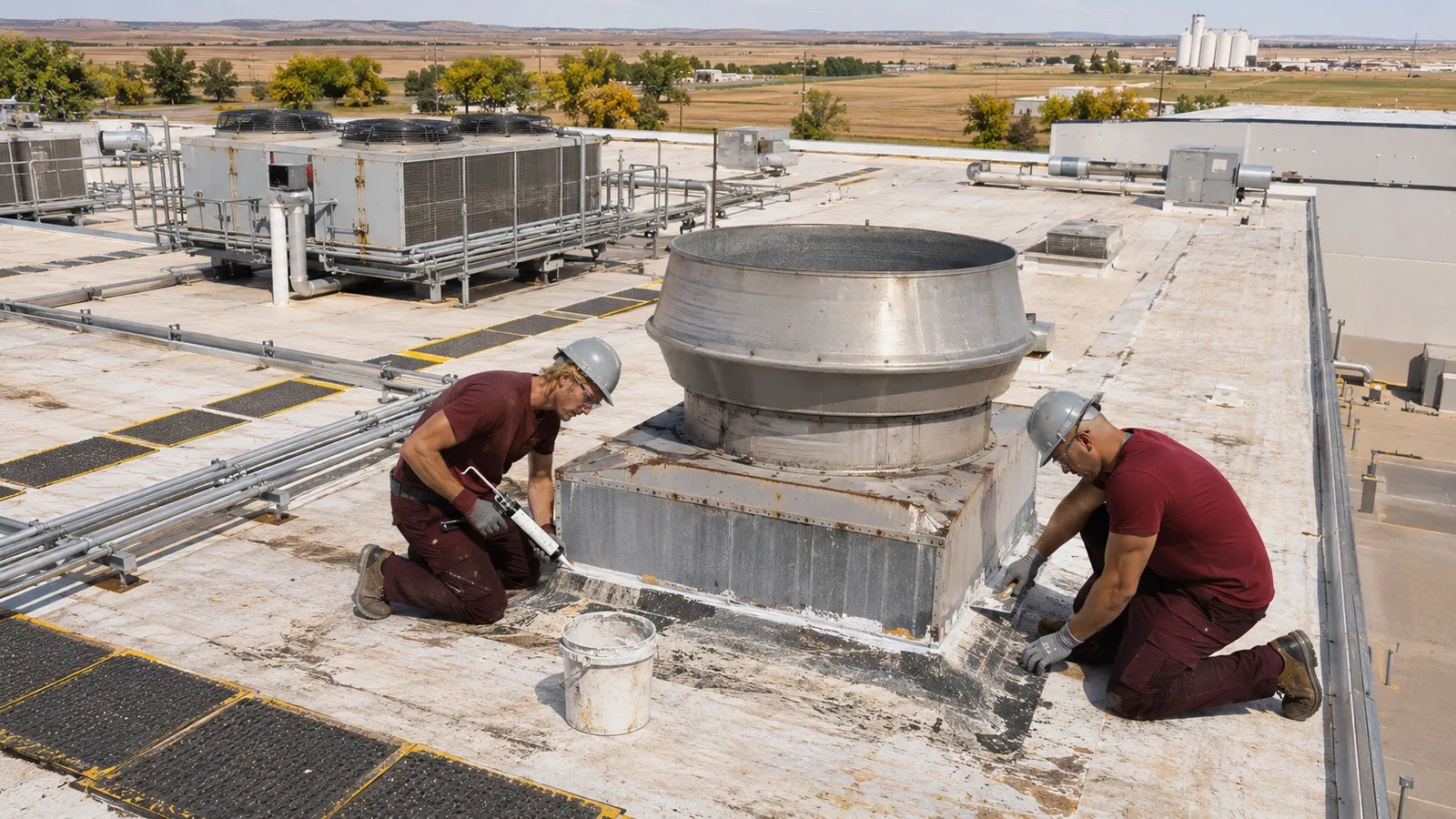
Answers about seams, screws, panels, and cost on metal buildings.
Seams
The lap gets cleaned and the old, failed sealant comes off. Fasteners along the seam are tightened or replaced, and then new butyl tape or sealant and a reinforced seam patch go on.
Standing-seam panels with opened seams get re-crimped, and every repaired seam is checked for gaps.
Leaks
Fasteners cause more metal roof leaks than anything else. Washers dry out and crack, and heating and cooling loosen the screws, so water runs down the shank into the building.
Lap seams, ridge caps, and flashings at walls and curbs come next.
Screws
The leaking screw comes out and a larger-diameter fastener with a new washer goes in. Stripped or oversized holes get a patch plate first, and empty holes from old equipment get a sealed metal patch.
We check every screw on the roof, because one leaker usually means others.
Cost
The count of fasteners, seams, and panels needing work sets most of the price. Rusted-through sheets need replacement, which costs more than resealing.
Slope, height, and lift or ladder access change labor, and older panel profiles can need custom trim or matched panels.
Panels
Yes, one damaged panel can usually be replaced without redoing the roof. We pull its fasteners, slide in a new panel of the same profile, add fresh lap sealant, and refasten.
Profile and gauge have to match for a tight fit, and the new color can look a little different from weathered sheets.
Tell us where the drips show up. We will check the fasteners, laps, and panels above them and fix what is leaking.