

One Repair at the Right Spot
Patching under a drip rarely stops a leak, because the water came in somewhere else. Tracing it to the true opening means the repair is made once, in the place that actually needs it.
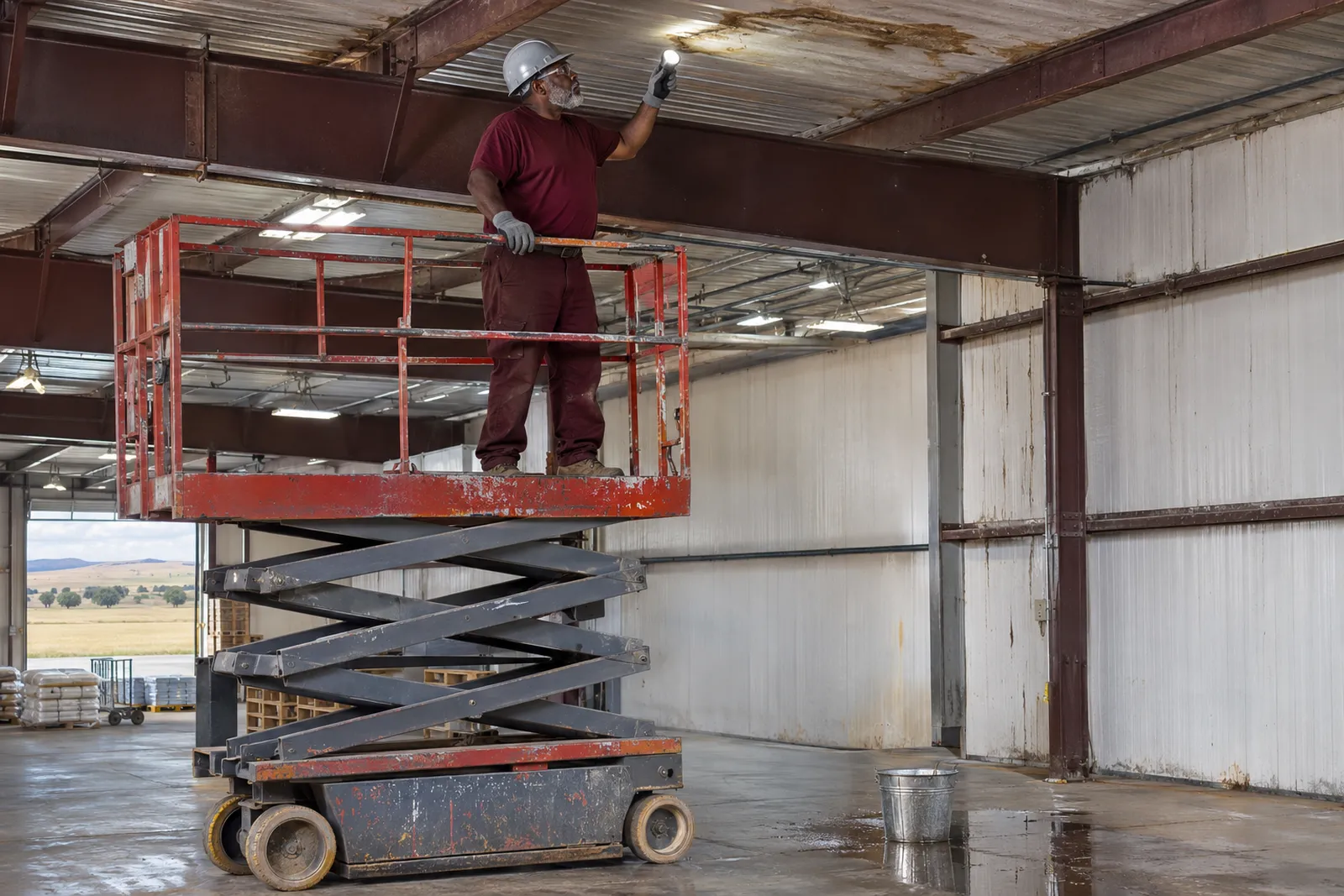
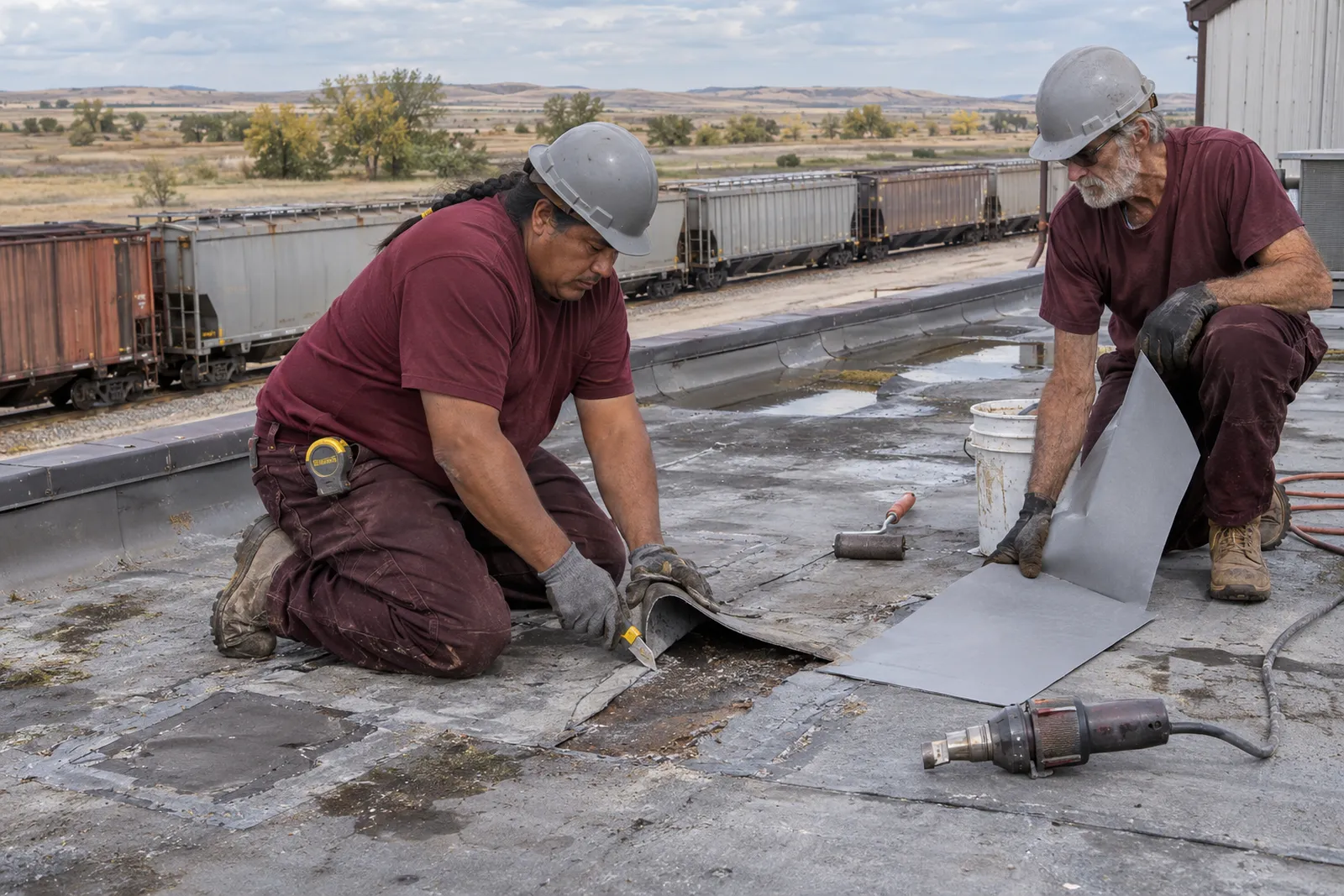
As a North Platte commercial roof leak repair contractor, we trace stains and drips to the real entry point on the roof and repair it there.
North Platte commercial roof leak repair ranges from one boot to a roof-wide moisture problem. Start with the symptom you see inside.
| Roof Condition | Single Repair | Area Repair | Replacement Talk |
|---|---|---|---|
| Drip only in downpoursDry in light rain, wet in heavy storms. | Usually Fits | Sometimes | Rarely |
| Stain below a rooftop unitWater follows the curb or the duct. | Usually Fits | Rarely | Rarely |
| New drips after hailPunctures or cracked membrane across the field. | Sometimes | Usually Fits | Rarely |
| Leaks during snowmeltIce at drains and edges backs water up. | Usually Fits | Sometimes | Rarely |
| Several new leaks every stormWet insulation found across large areas. | Rarely | Sometimes | Usually Fits |
Water moves along the deck before it drips, so we check the zones upslope of every stain.
Wind-driven rain pushes past wall flashing and open coping joints, then runs down inside the wall. These leaks show up at the perimeter, often well below the actual gap.
Hail punctures and split laps in the open field let water under the membrane, where it spreads before finding a seam in the deck. Probing each lap finds the opening.
Snowmelt refreezes at drains and gutters and forms ice dams that hold water against laps. Backed-up water then leaks at flashings set lower than the pond.
Rooftop units are the most common source behind a stain in the middle of a room. Cracked curb corners, loose counterflashing, and split boots get rebuilt and reflashed.
Deck flutes and purlins carry water sideways for several feet. Moisture meters and core cuts follow that path back to the entry point and show how much insulation is wet.
The right repair depends on what let the water in and how far it spread.
Punctures, cracked membrane, split seams, and dented flashings get patched, and each damaged spot is photographed for your insurer.
Rebuild cracked curb corners, replace split pipe boots, and reset counterflashing under rooftop units and vents.
Clear drains and gutters, reseal laps that held meltwater, and add heat tracing at problem drains where it helps.
Water testing, moisture meters, and infrared scans on large roofs locate leaks that a visual walk misses.
Every storm a leak stays open adds to the bill. Finding the entry point quickly keeps the repair small.
Patching under a drip rarely stops a leak, because the water came in somewhere else. Tracing it to the true opening means the repair is made once, in the place that actually needs it.
Each storm through an open lap soaks more boards. Stopping it early keeps the tear-out to a few square feet.
Machines, electrical panels, and pallets under a leak stop taking water once the opening above them is closed.
Photos of hail and storm damage on the roof, taken during the inspection, give you something concrete to share with your insurer.
Protect what is under the drip and note when it started. Call and we will trace the leak back to where it enters the roof.
Leak work goes from the inside out, then back down to confirm.
Stains, drips, and wet tile get marked on a floor plan, along with when each one shows up: rain, wind, or snowmelt.
Seams, penetrations, and flashings upslope of each mark get inspected, since water travels along deck flutes and purlins before it drops.
Moisture meters or a water test confirm the source. Then the opening gets patched, rewelded, or reflashed with matching material.
After the repair, check the marked spots during the next rain and call if any of them show water again, so the roof gets rechecked.
Once the entry point is found, the repair belongs to one of these services.
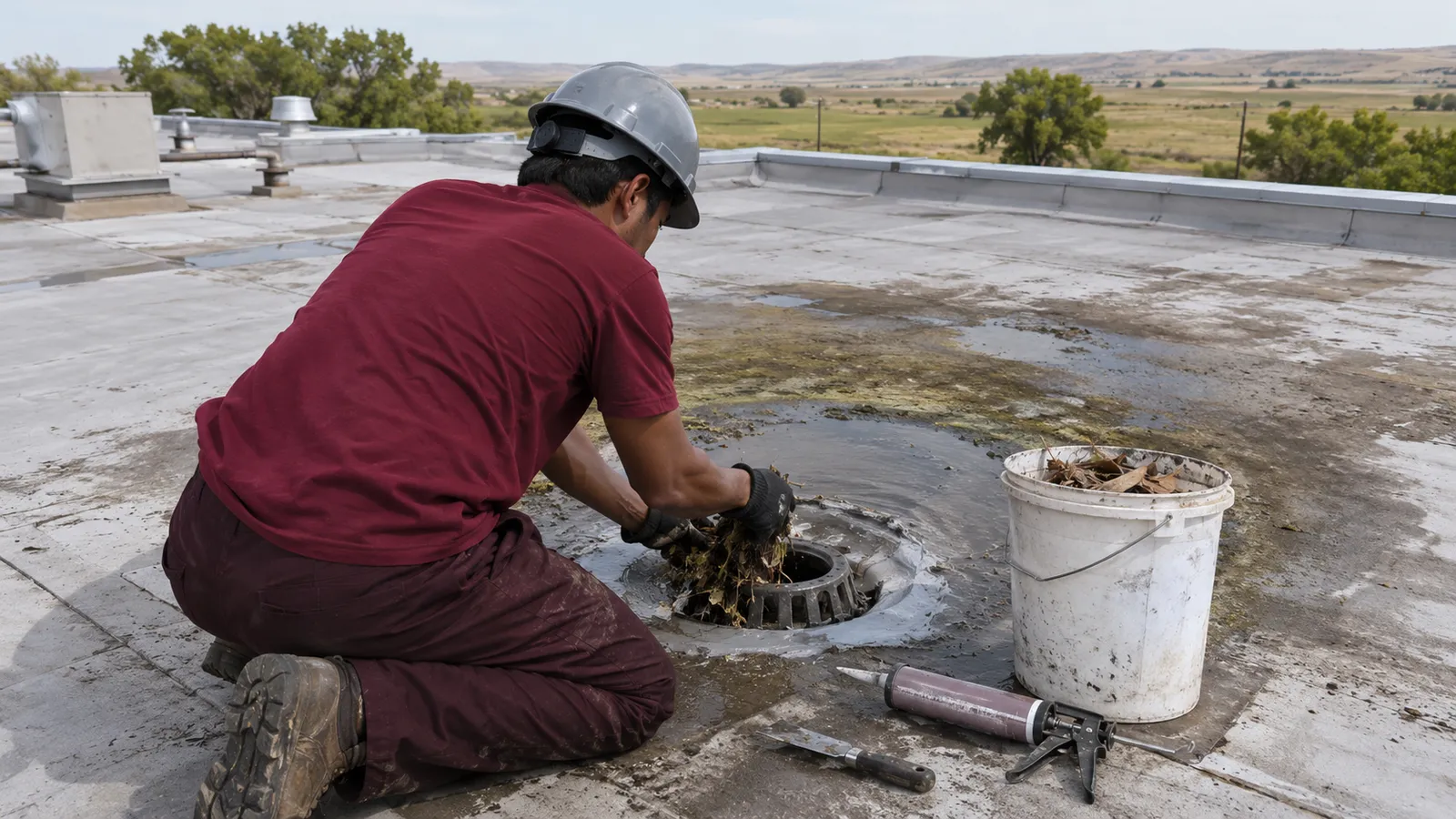
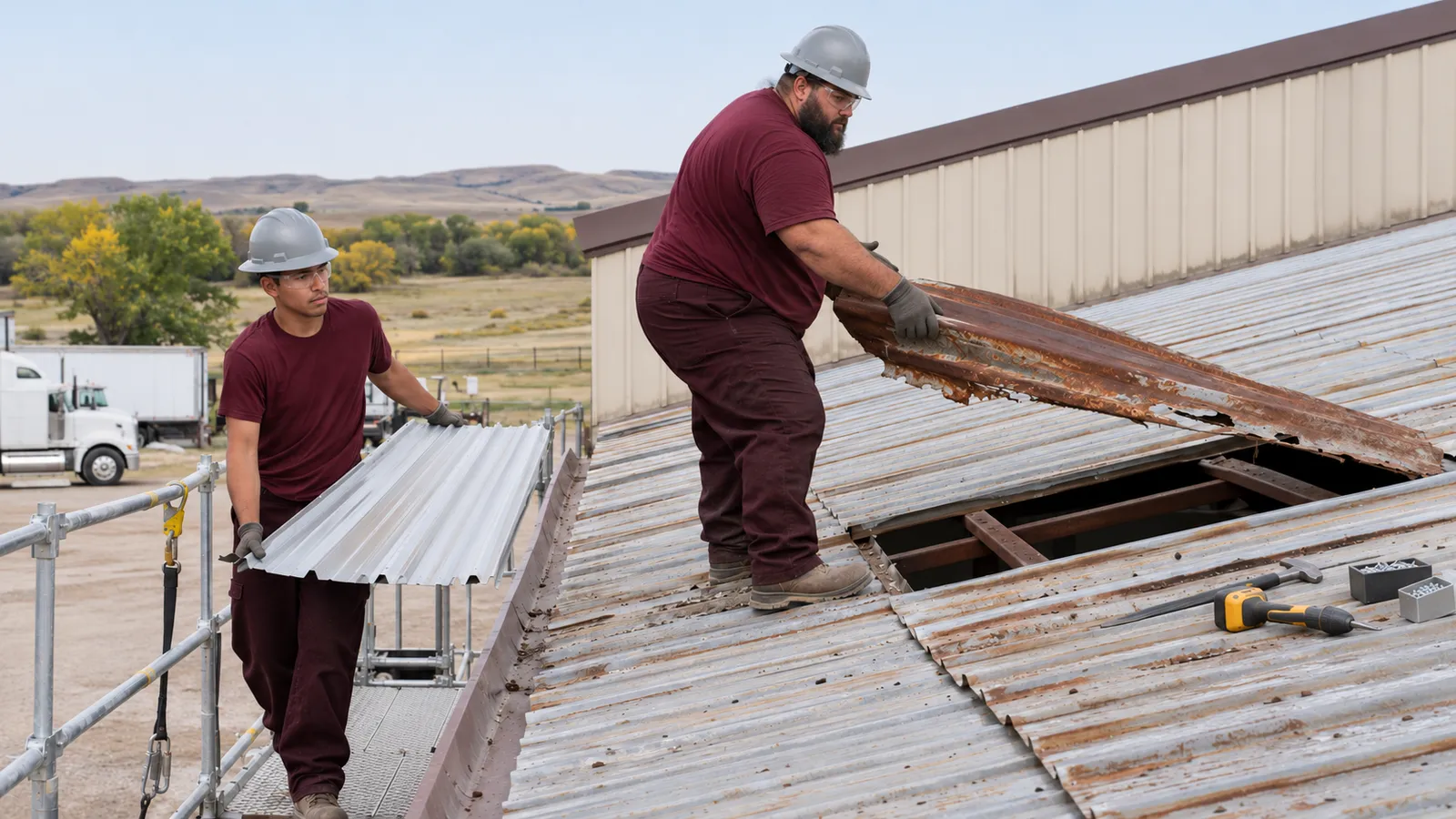
Fasteners, laps, and rusted panels on shop and warehouse roofs.
See metal roof repair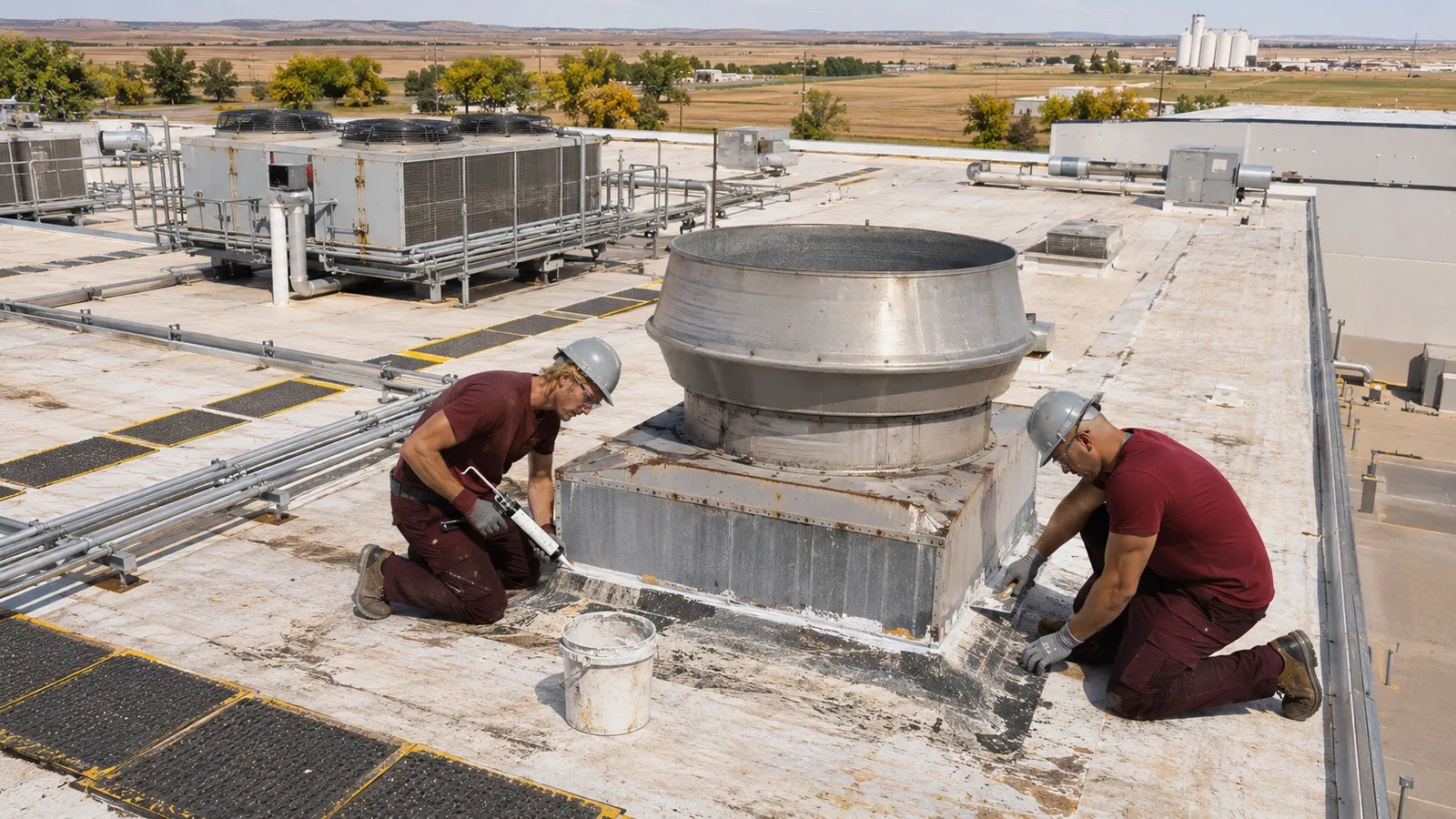
Answers about hail, heavy rain, snowmelt, tracing, and cost.
Hail
Look for punctures, cracked membrane, split seams, and dented flashing. A July 9, 2014 storm dropped golf ball to baseball size hail on North Platte and damaged roofs, according to the National Weather Service.
Hail damage can stay dry for months before it leaks, so we photograph what we find for your insurer.
Heavy Rain
A commercial roof should stay dry in heavy rain as well as light rain. When water shows up only in downpours, look at overflowing drains, flashing set too low, and open seams near the waterline.
Wind-driven rain can get past wall flashing too. Trace these leaks before they soak the insulation.
Tracing
Mark the wet spots inside, then compare them with the roof features above. Water often runs along deck flutes or purlins before it drips.
We inspect seams, penetrations, and flashings upslope of the drip and confirm with moisture meters or a water test. On big roofs, infrared scans show wet insulation.
Cost
How hard the leak is to find, and what it has damaged, drive most of the cost. One failed flashing costs less than leaks spread over many seams.
Wet insulation, damaged deck, interior damage, and testing time to trace hidden leaks all add scope.
Snowmelt
Meltwater refreezes at drains, gutters, and edges and forms ice dams. Water then backs up under laps and flashings that were never built to hold it.
The National Weather Service puts the city's average December through February snowfall at 13.8 inches. Clear drains, plus heat tracing where needed, cut down ice-dam leaks.
Sealant
Store-bought sealant slows a metal roof leak for a short time, and the patch rarely lasts where metal moves or water ponds.
A lasting repair replaces failed fasteners, reseals laps with butyl tape, and patches holes with metal. Old sealant has to be cleaned off first.
Tell us where the water shows up and when. We will trace it to the roof and close the opening.