Production That Keeps Going
Repairs happen from above while the floor below stays in use. Lifts, hot work permits, and protected zones get worked out with the plant manager before anyone goes up.
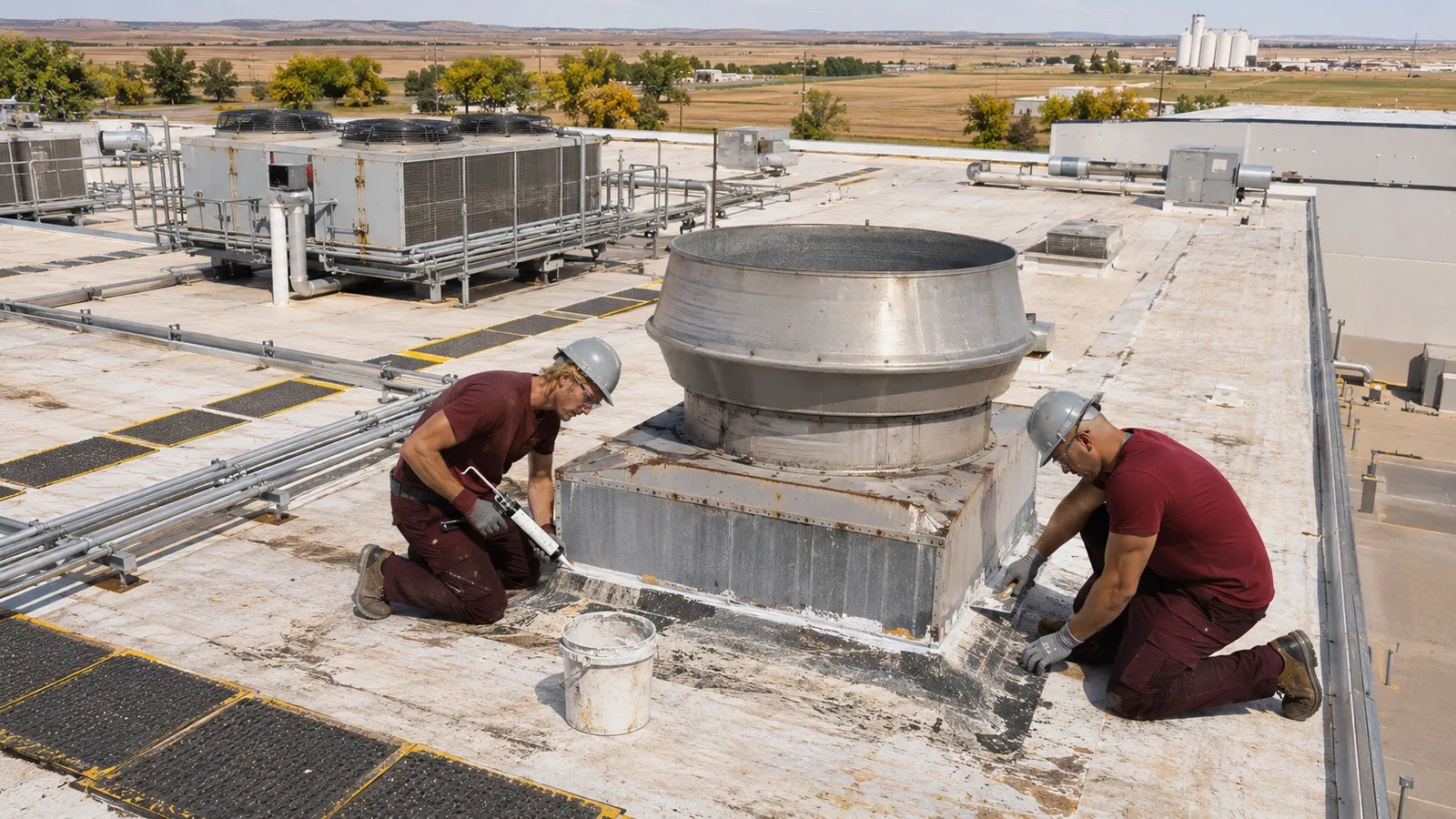
As a North Platte industrial roof repair contractor, we repair roofs around exhaust fans, vents, curbs, and skylights while the plant below keeps working.
North Platte industrial roof repair is sorted by what the equipment and the roof are doing. Match your condition to the usual scope.
| Roof Condition | Spot Repair | Area Repair | Replacement Talk |
|---|---|---|---|
| Stained membrane at a fanGrease or heat softened the area. | Usually Fits | Sometimes | Rarely |
| Leak at a skylight curbPerimeter sealant cracked or missing. | Usually Fits | Rarely | Rarely |
| Ponding near a heavy unitDeck shows deflection under the load. | Rarely | Usually Fits | Sometimes |
| Open expansion jointCover torn or pulled from the curb. | Sometimes | Usually Fits | Rarely |
| Chemical wear across a wide areaMembrane brittle well beyond the vents. | Rarely | Sometimes | Usually Fits |
Industrial roofs carry equipment that wears the membrane around it. These zones get the closest look.
Long walls on plant buildings move with heat from inside and cold outside. Coping joints and base flashing open along those runs and get resealed and refastened in sections.
Maintenance traffic wears paths across the membrane between units, and tools dropped near equipment puncture it. Worn areas get patched, and walkway pads go down along the busiest routes.
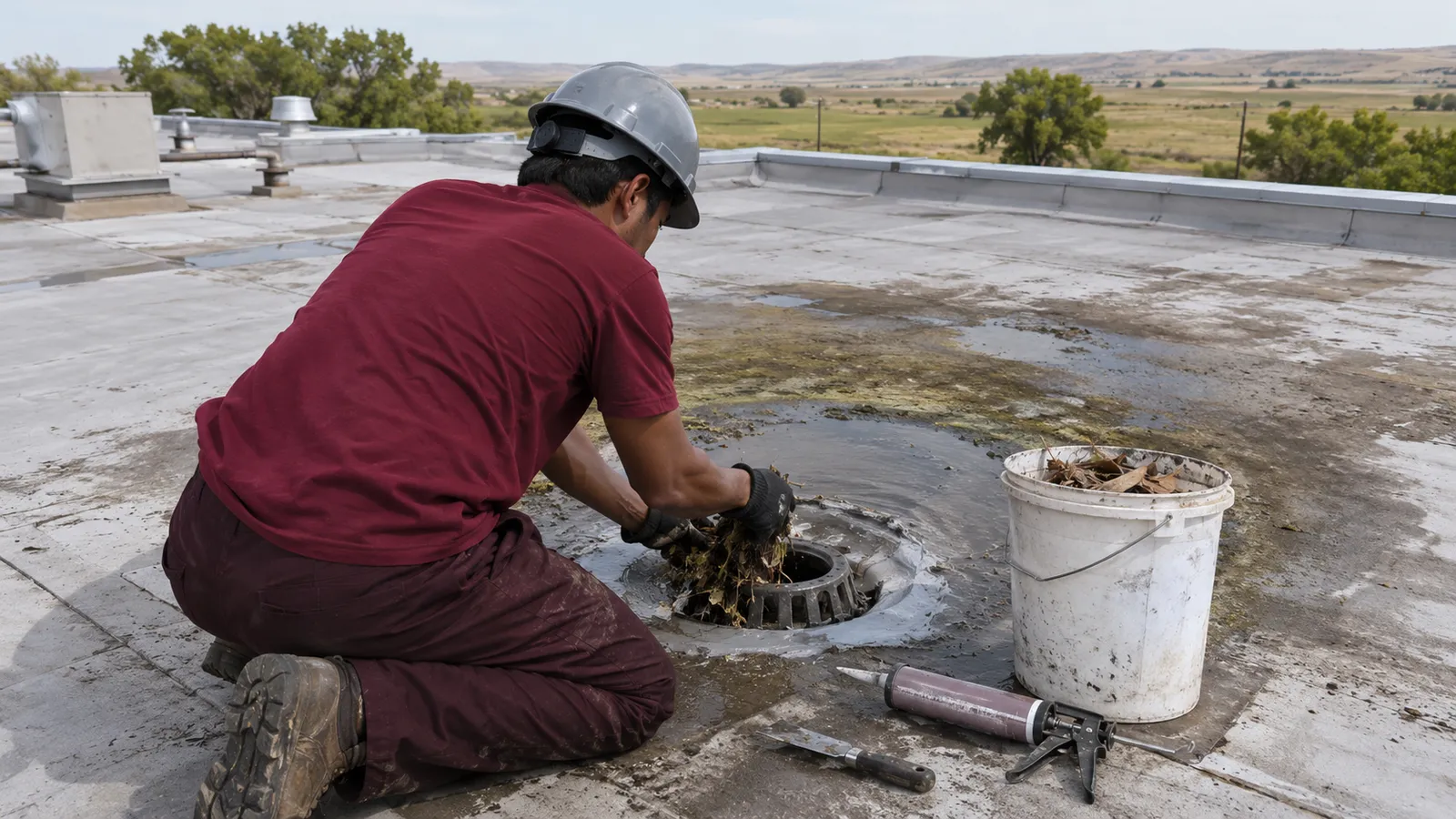
Large roofs send big volumes of water to a few drains, and expansion joints flex with the building. Both get resealed, with drains cleared and joint covers refastened to their curbs.
Grease, heat, and chemical exhaust soften and stain membrane around fans and vents. Damaged material gets cut out and the curb reflashed with membrane rated for that exhaust.
Heavy units can deflect the deck and leave a low spot that holds water. We note deflection, check the insulation for moisture, and flag structural signs for your engineer.
Plant roofs need repairs planned around the equipment and the people below.
Clean grease from the area, cut out damaged membrane, reflash the fan curb, and add grease containment at the discharge.
Trace leaks over production lines and seal the source from above, with diverters inside over sensitive equipment while work goes on.
Reseal skylight perimeters, replace cracked curb flashing, and refasten or replace torn expansion joint covers.
Rank problem areas by leak risk and stock below, then repair the worst first, leaving the roof watertight after each phase.
A plant roof leak is a production problem first. Repairs planned around the equipment keep lines and stock dry.
Repairs happen from above while the floor below stays in use. Lifts, hot work permits, and protected zones get worked out with the plant manager before anyone goes up.
Membrane matched to the exhaust and grease containment at the fan slow the damage that brings the same leak back every season.
Resealed skylight perimeters and refastened joint covers stop the slow leaks that drip onto rail-service and warehouse floors.
Each problem area is tied to the unit or vent above it, so maintenance staff know which machine is wearing the roof.
Grease and heat break down roofing around exhaust fans. Call and we will check the curb, the counterflashing, and the membrane around it.
Four steps keep plant repairs safe and on schedule with the work below.
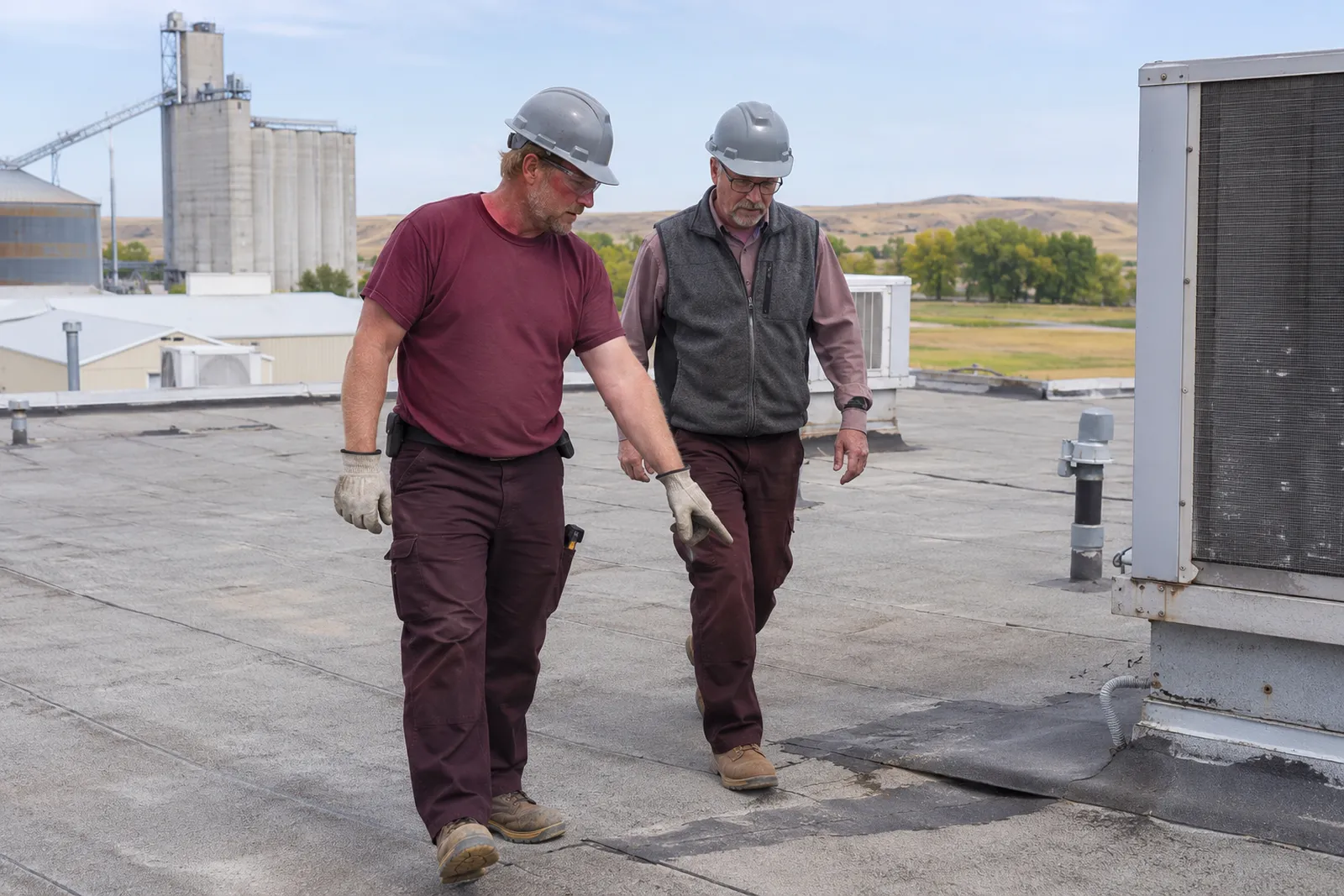
We check the membrane, every fan, vent, stack, and curb, the walkways, and the deck near heavy units, and tie each finding to the equipment above it.
Lift locations, hot work permits, fan shutdowns, and protected areas below the roof get settled with the plant manager before work starts.
Damaged membrane comes out, curbs get reflashed, and joints and skylights get resealed while diverters protect sensitive equipment inside.
You get photos and notes listing each repair by the fan, vent, or skylight it sits beside, ready for your maintenance staff.
Plant buildings often mix low-slope sections, metal additions, and leaks that need tracing.
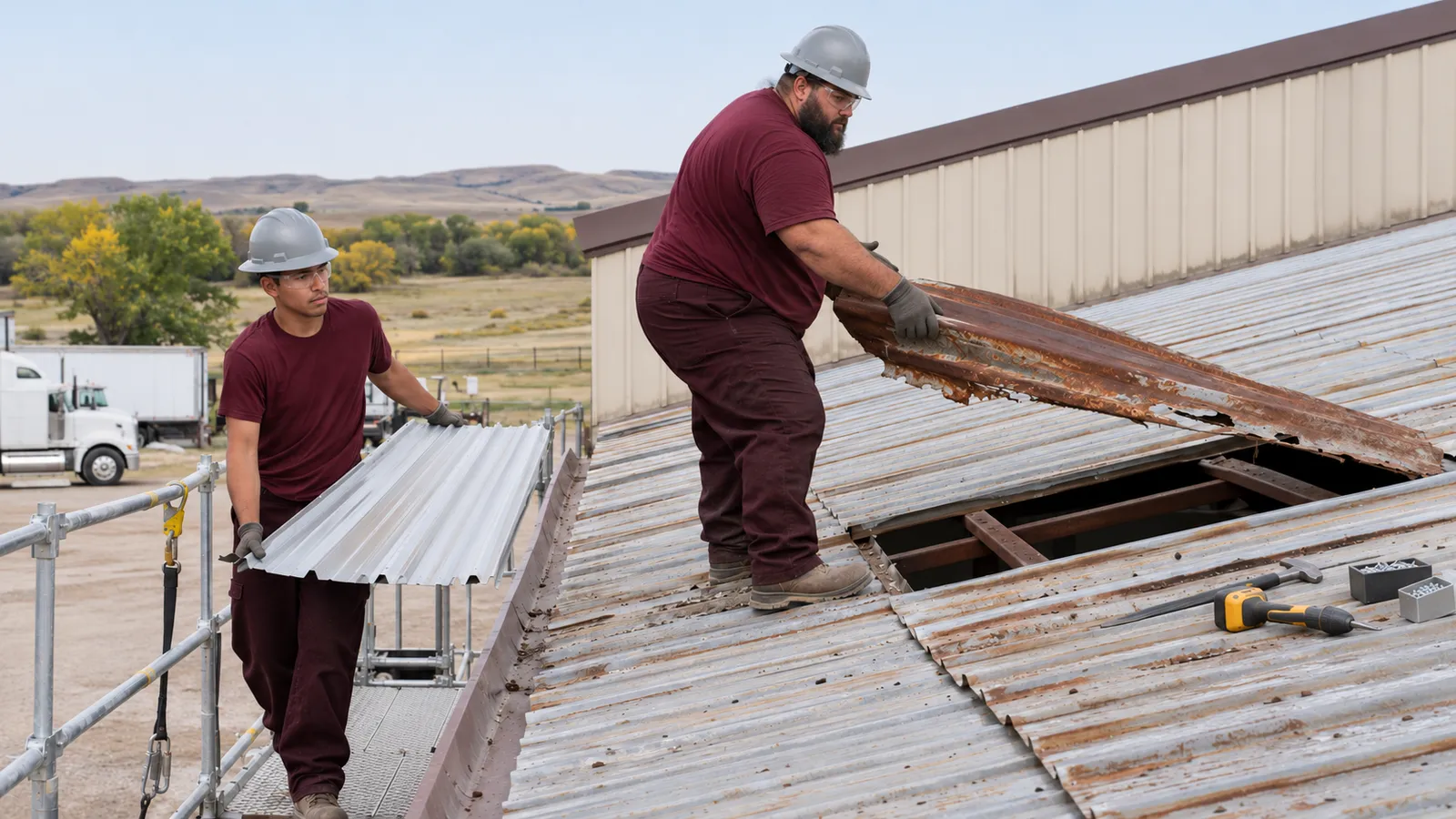
Fasteners, laps, and rusted panels on shop and warehouse roofs.
See metal roof repair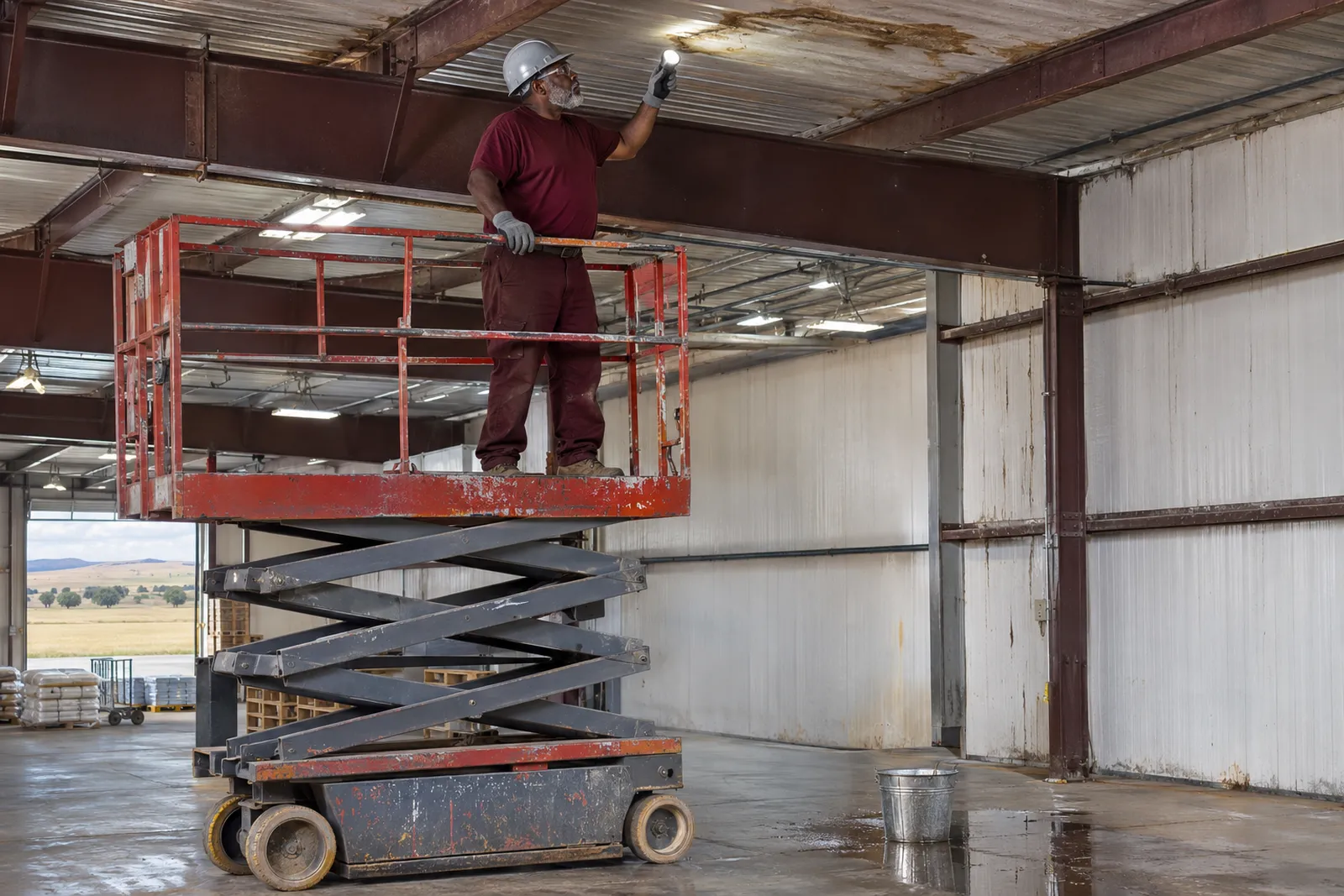
Answers about inspections, fans, production, and large warehouse roofs.
Inspection
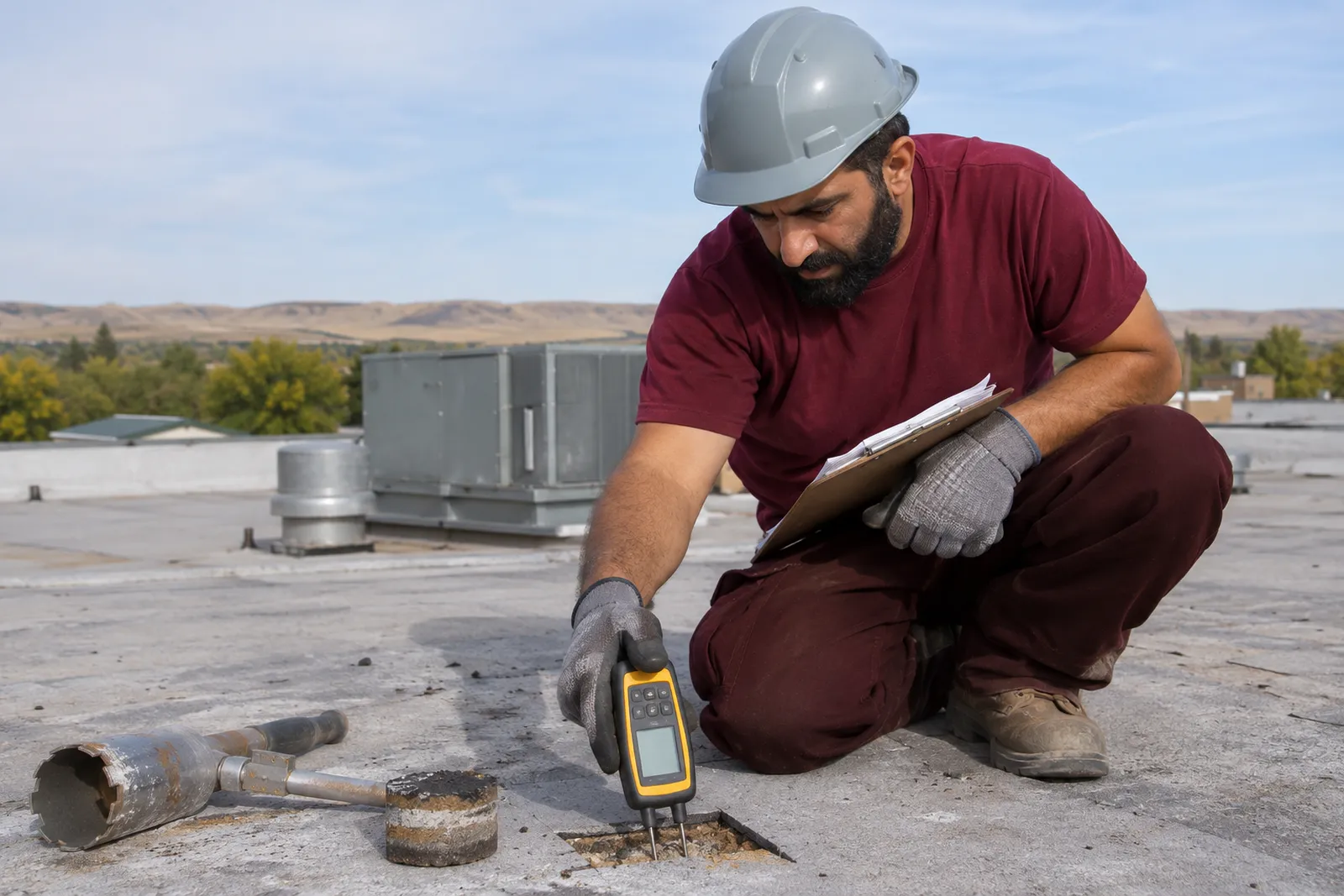
Besides the roof system itself, an industrial inspection covers exhaust stacks, process vents, equipment curbs, and walkways. Grease, chemicals, and vent heat soften or stain membrane.
We also look for structural warning signs such as deck deflection near heavy units, and we tie each finding to the equipment above it.
Exhaust Fans
Fan leaks usually come from cracked curb flashing, failed counterflashing, or membrane broken down by grease or heat.
The area gets cleaned, the damaged membrane cut out, and the curb reflashed with material that holds up to that exhaust. Grease containment at the discharge helps stop the damage from coming back.
Production
Most plant roof leaks get repaired from above while production keeps going. We work out lifts, hot work permits, and protected areas with the plant manager.
Temporary diverters inside catch water over sensitive equipment during the repair. Fan curb work can mean shutting a unit down for a short time.
Large Roofs
Rail-service warehouses tend to have large roofs with many skylights, curbs, and long seams. Repairs center on skylight perimeters, expansion joints, and drains that carry heavy flows.
Dust and building movement wear sealants down, so we map problem areas across the whole roof before starting.
Phasing
Yes, when budget or operations call for it. Problem areas get ranked by leak risk and by the stock stored under them.
The worst areas go first, and each phase leaves the roof watertight. Phasing works best on roofs that are still in good shape overall.
Tell us which equipment sits over the leak. We will inspect the roof around it and plan the repair with your plant manager.